

In a recent webinar, “Terraform at Scale: 5 Things Terraform Cloud Doesn’t Provide,” Boris Isakov, DevOps Lead at Rapyd, shared how his team scaled their Terraform operations, what challenges emerged over time, and what led them to move beyond Terraform Cloud.
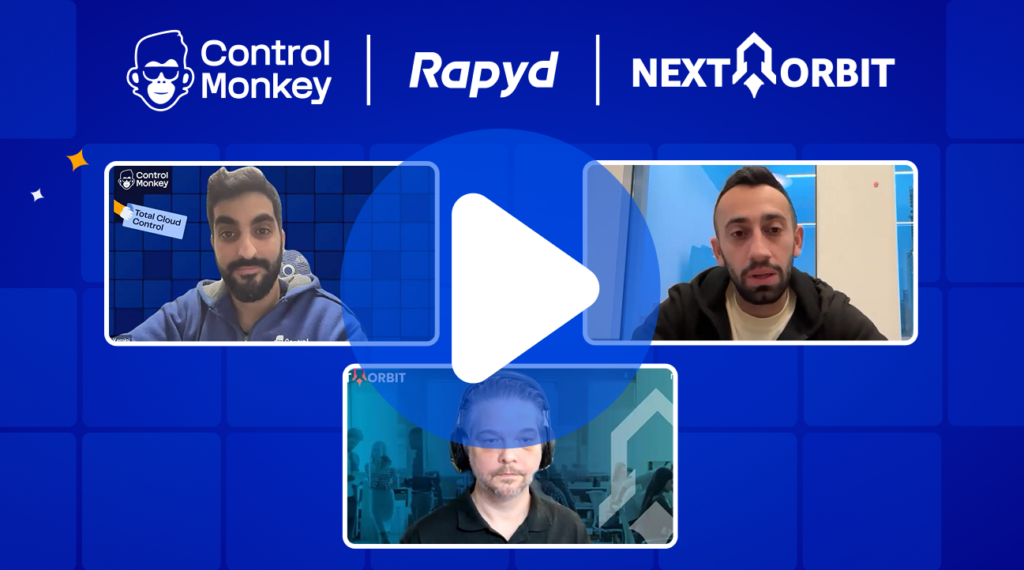
Below are key insights from that conversation.
When Terraform Cloud Meets Real Scale
As cloud infrastructure rapidly expands, fueled by the proliferation of AI, organizations are rethinking how they use Terraform to manage cloud at scale. At Rapyd, what began as a structured Terraform Cloud setup became increasingly complex as more teams, environments, and resources scaled alongside this growth.

We have thousands of AWS resources across multiple accounts and regions… hundreds of workspaces, and multiple teams working across dev, integration, QA, and production.

With multiple DevOps teams operating globally, maintaining visibility, consistency, and control across environments became significantly more challenging. It became clear with time that a solution like Terraform Cloud could not cut it.
Challenges that many see with Terraform Cloud
In this webinar, Boris and other cloud leaders have spoken about:
1. Limited Visibility Beyond Terraform
The first major gap was visibility.
You only see what Terraform manages. You have no idea what exists in your AWS account that is not under Terraform control.
This meant teams were operating with only a partial view of their infrastructure – a growing risk in a regulated fintech environment.
2. Cost Becomes Difficult to Predict
As the number of managed resources increased, cost became harder to control.
“As our environment grew, the bill increased significantly… the model charges per managed resource.”
In practice, this led to unexpected outcomes:
We had a single WAF configuration with around 5,000 rules… each one counted as a separate managed resource.
This created a mismatch between logical infrastructure and billing, making cost forecasting more complex.
3. Control Over State and Security
State management also became a concern as the environment matured. “Having Terraform states in a third-party platform wasn’t ideal from a security perspective.” For a fintech company, maintaining tighter control over infrastructure data became increasingly important.
Migration Without Disruption to Controlmonkey
At this point, the team stepped back.
“We made a list of real problems we wanted to solve — not just replace features, but actually improve our situation.”
They weren’t looking to replace Terraform Cloud feature-for-feature.They focused on what was missing:
- Visibility across all cloud resources — not just what Terraform manages
- A pricing model that doesn’t break at scale
- Control over where state is stored
- Consistency across teams and environments
This was the shift – from managing Terraform Cloud to putting structure around how infrastructure is actually governed at scale.
The Turning Point: Seeing What Was Missing
After connecting their environments, the team experienced a ‘Eureka’ , that changed the way they looked at their infrastructure.
The first time we saw everything… including unmanaged resources… the number was significant. Things created over the years were just sitting there… we wouldn’t even know they existed..
Up until that point, they were operating based on what Terraform Cloud showed them. All of a sudden, Rapyd could understand all of the resources that were managed outside of Terraform code.- resources that had been created manually over time, never tracked, never governed. That visibility immediately turned into action.
First, they started cleaning up. Resources that were no longer in use were identified and removed. This wasn’t just about reducing cost, it was about simplifying the environment and removing unknowns.
At the same time, they focused on the resources that were still active but not managed through Terraform. Those needed to be brought under control.
Taking resources that were actively used but not Terraform-managed and bringing them under infrastructure-as-code control.
While that work is still ongoing, there is a clear direction: move towards full infrastructure-as-code coverage and eliminate any unmanaged resources.
What Changed
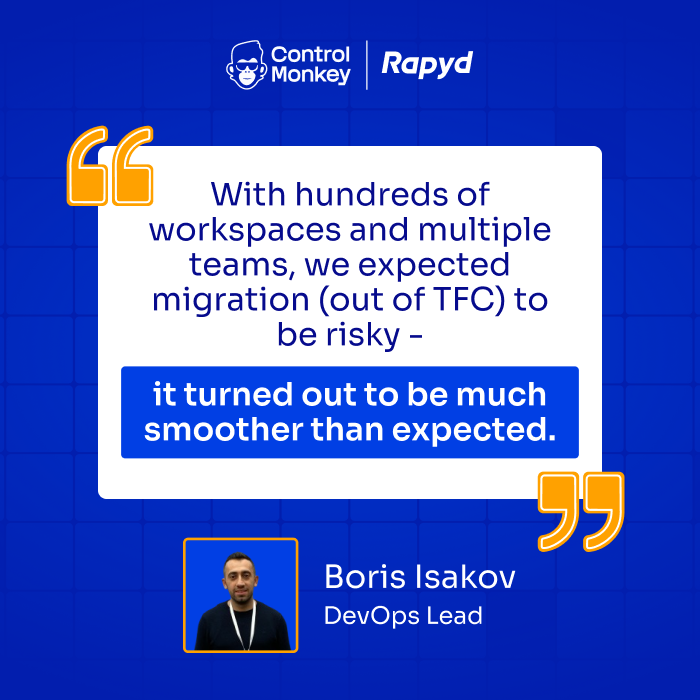
With full visibility and a more structured approach, the team moved from reacting to issues, to proactively managing their environment.
They were able to identify and remove unused resources, bring unmanaged infrastructure under Terraform, and create more consistency across teams and environments. Over time, this gave them stronger control over how infrastructure is deployed and maintained.
What Rapyd experienced isn’t unique
It’s what happens when Cloud environments grow beyond a certain point. Lack of visibility becomes a weakness. Costs become harder to predict. Resources accumulate outside of Terraform without anyone noticing. And over time, control starts to slip.
The shift isn’t just about tooling. It’s about moving from managing Terraform to managing the infrastructure itself — with visibility, ownership, and consistency across the board.
Request a demo to see how it works:

A 30-min meeting will save your team 1000s of hours
A 30-min meeting will save your team 1000s of hours