
Infrastructure-as-Code (IaC) helps Platform Engineers and DevOps improve software delivery and security.
This guide assesses Platform Engineers and DevOps, comparing their roles in modern software delivery with IaC, and explains how tools like ControlMonkey benefit both.
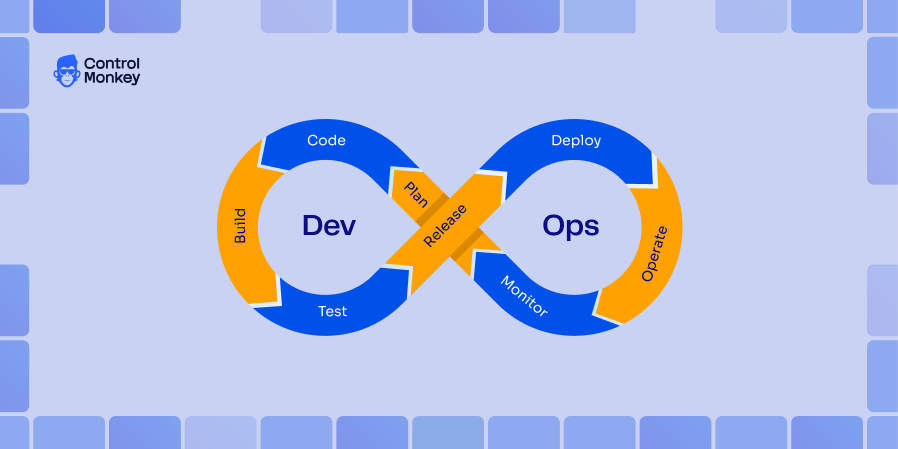
What is a DevOps Engineer?
DevOps is an engineer in your team that combines culture, development and IT operations to accelerate release cycles and improve deployment quality.
What is the role of a DevOps engineer?
- Overseeing CI/CD pipelines
- Automating/building/testing/deploying workflows
- Fostering development efficiencies
- Implementing and monitoring Infrastructure-as-Code (IaC)
What is a Platform Engineer?
A Platform Engineer is a team member who designs, builds, and maintains internal technology platforms. The main goal is to enable software teams to develop, deploy, and operate applications efficiently. Unlike DevOps, platform engineers focus on creating scalable, secure, self-service environments – Internal Developer Platforms. IDPs streamline workflows and reduce operational friction.
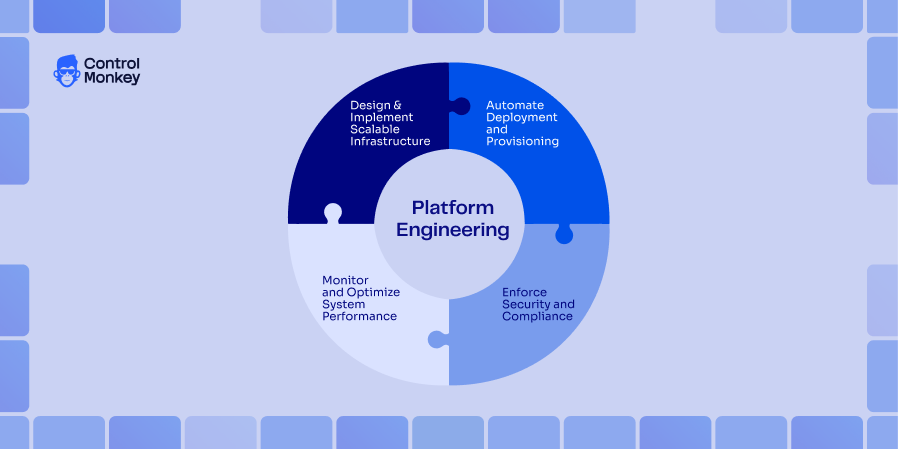
What is the role of a platform engineer?
- Design & Implement Scalable Infrastructure
- Automate Deployment and Provisioning
- Monitor and Optimize System Performance
- Enforce Security and Compliance
Platform Engineer vs DevOps: Overlaps and Differences
Platform Engineers and DevOps both aim to accelerate software delivery by improving infrastructure, automation, and developer workflows. They share a commitment to efficiency, scalability, and collaboration, often using IaC, CI/CD pipelines, and cloud-native tooling to reduce friction in the development lifecycle.

Check How IaC Automation Empowers DevOps & Platform Teams
Explore how a unified IaC platform reduces friction, improves reliability, and accelerates delivery.
Where they diverge is in how they approach these goals and who they serve. DevOps emphasizes cultural transformation and shared responsibility across teams, while Platform Engineers focus on building centralized, reusable platforms that abstract complexity and empower developers through self-service.
| Role | Primary Focus | Philosophy |
|---|---|---|
| DevOps | Speed, delivery, collaboration | Streamline and accelerate development through automation and CI/CD practices |
Platform Engineers | Developer experience, abstraction, scalability | Build to run developer code and create internal platforms for dev teams |

Platform Engineers vs DevOps – Key Differences
- DevOps distributes operational responsibility across teams, requiring developers to manage infrastructure and deployments.
- Platform Engineers centralize infrastructure management, offering standardized tools and environments that reduce cognitive load for developers.
- DevOps is culture-driven, while Platform Engineering is product-driven.
Problems Platform Engineers vs DevOps Are Designed to Solve
Platform Engineers and DevOps are similar, but address distinct challenges.
Problems SRE vs DevOps Are Designed to Solve
Platform Engineers and DevOps are similar, but address distinct challenges.
| Platform Engineers Solve Problems Like: | DevOps Teams Solve Problems Like: |
|---|---|
| Reducing developer cognitive load | Accelerating time-to-market for new features |
| Standardizing tooling and workloads across teams | Breaking communication silos between development and operations |
| Improving developer experience | Automating and securing deployment pipelines |
| Embedding governance and security by design | Managing IaC across multi-cloud and hybrid environments |
| Scaling infrastructure with reliability and efficiency | Enabling continuous integration and delivery |
Platform Engineers vs DevOps: Key differences in IaC practices and performance metrics
DevOps use IaC to define and provision infrastructure in a descriptive model that ensures consistency and repeatability in deployments. By automating infrastructure through Terraform models and IaC templates, they accelerate provisioning to deliver software faster. DevOps monitoring focuses on performance issues and reliability.
A 30-min meeting will save your team 1000s of hours
Platform Engineering and DevOps Both – use ControlMonkey to solve all of the problems you just read about.
Key metrics for DevOps include:
- Delivery speed, automation and efficiency
- Deployment frequency, lead time for changes, change fail rates
Platform Engineers approach IaC not just as a tool for provisioning infrastructure, but as a foundational layer for building scalable, reusable, and secure internal platforms. Their focus is on creating predefined workflows and templates that empower developers to deploy with speed and confidence, without needing deep infrastructure expertise.
Key metrics for Platform Engineers include:
- Platform adoption and usage rates
- Time-to-onboard new services or developers
- Mean time to recovery (MTTR) for platform incidents

"We achieved a 100% SOC 2 compliance acceptance rate, particularly around encryption and the security pillar of SOC 2. Compliance is now built into our infrastructure delivery process and proactively enforced, giving us confidence that issues are addressed before they ever reach production"

Platform Engineers vs. DevOps: Tools and Priorities


| Category | Tools Used | DevOps Focus | Platform Eng Focus |
|---|---|---|---|
| Infrastructure as Code (IaC) | Terraform, CloudFormation, Ansible | Automate provisioning and deployment | Build reusable modules, enforce standards and enable self-service provisioning |
| CI/CD Pipelines | Jenkins, GitHub Actions, GitLab CI | Build, automate, and deploy software | Integrate CI/CD into internal platform |
| Observability & Monitoring | Prometheus, Grafana, Datadog, ControlMonkey, New Relic | Not primary tools; may assist with basic monitoring | Track platform usage, developer experience, systems health |
| Incident Response & Reporting | PagerDuty, Opsgenie, Sentry | Occasionally assist during incidents | Automate platform-level incident workflows and provide visibility |
| Security & Governance | Checkmarx, Sentinel, Synk | Embed security into CI/CD and IaC workflows | Enforce policy-as-code, ensure compliance |
| Developer Experience | Backstage, Port, IDPs | Not a primary focus | Centralize tools, templates and documentation to reduce friction |
Platform Engineers vs DevOps in an IaC World
The rise of IaC has reshaped how Platform Engineers collaborate with DevOps teams, shifting the focus from ad hoc tooling to scalable, reusable infrastructure patterns. Rather than simply accelerating delivery, Platform Engineers aim to build internal platforms that empower developers through self-service and guardrails. IaC plays a central role by offering a consistent, version-controlled foundation that aligns both teams around a shared configuration model, making infrastructure predictable, auditable, and easier to evolve collaboratively.

"What once took days of back-and-forth communication with DevOps now only takes a few minutes. We removed all frictions by making the process fully automated and self-served, but the real gem is that our data is entirely secure."

ControlMonkey for Platform Engineers and DevOps
ControlMonkey is built to supercharge both Platform Engineers and DevOps teams by automating Terraform workflows at scale. It streamlines infrastructure delivery with compliant blueprints, drift detection, and AI-powered code generation, reducing manual effort while boosting reliability.
By enabling self-service provisioning and governance, ControlMonkey helps teams build faster without compromising control.
Ready to see it in action?

A 30-min meeting will save your team 1000s of hours
A 30-min meeting will save your team 1000s of hours
Author