Join our next Live Demo on Mar 16th!

Resource Blog News Customers Stories

Updated: Feb 24, 2026 Upd: 24.02.26

7 min read

10 Cloud Backup & Disaster Recovery Books Every CIO Should Know

Zack Bentolila

Zack Bentolila

Marketing Director

10 Cloud Backup & Disaster Recovery Books Every CIO Should Know

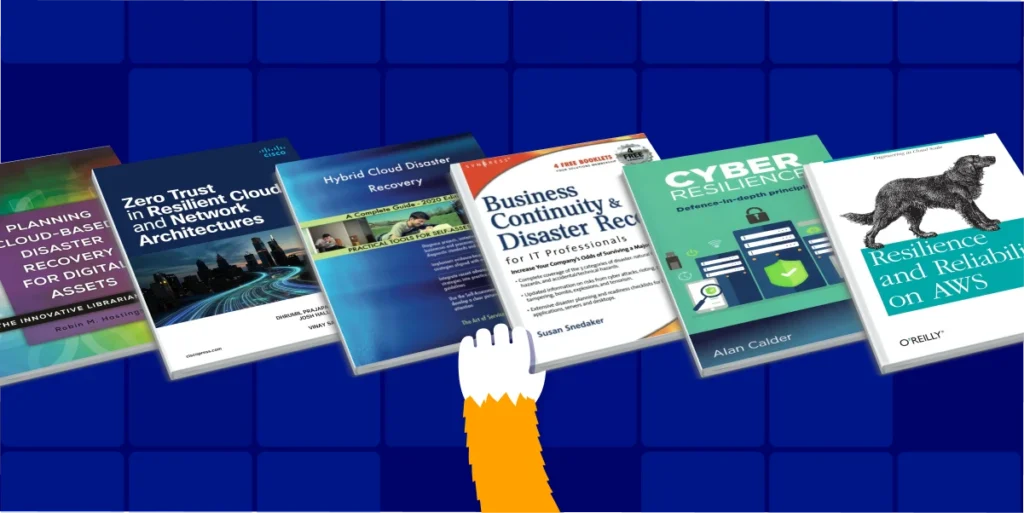
Backup and Disaster Recovery Books give CIOs and cloud leaders the strategic and technical insight needed to protect modern infrastructure. We selected these books because they present complex disaster recovery concepts in a practical, easy-to-apply format.

Essential Backup and Disaster Recovery Books for Cloud Resilience

These Backup and Disaster Recovery Books reflect the shift from legacy data center recovery to cloud-native infrastructure resilience.
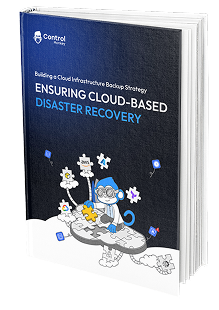
Aharon Twizer Book about Cloud Backup and Disaster Recovery

1. Cloud Disaster Recovery: The Complete Guide

Cloud Disaster Recovery: The Complete Guide by Aharon Twizer
  • A modern, cloud‑native DR guide focused on automation, reproducibility, and reducing operational risk through infrastructure‑as‑code practices. 
  • Tips on how to recover your AWS, Azure, and GCP cloud configurations
  • Why SaaS configurations are a critical part of your BCP 

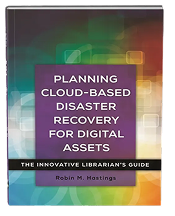
2. Planning Cloud-Based Disaster Recovery

Planning Cloud-Based Disaster Recovery for Digital Assets by Robin M. Hastings

  • A practical guide to designing cloud‑ready disaster recovery strategies that safeguard critical digital assets in the public‑sector and knowledge‑driven environments. 
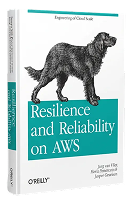
3. Resilience and Reliability on AWS 

Resilience and Reliability on AWS  by Jurg Van Vliet 

  • AWS Cloud Resilience Guide: A practical book focused on building highly available and fault-tolerant applications specifically on Amazon Web Services (AWS).
  • Hands-On AWS Architecture Patterns: Step-by-step examples combining AWS with PostgreSQL, MongoDB, Redis, Elasticsearch, CloudFront, and Route 53 to design scalable, outage-resistant systems.
  • Proven AWS Outage Survival Strategies: Real-world techniques for failover, backup/restore, monitoring, and global content protection in AWS environments.

4. Hybrid Cloud Disaster Recovery: A Complete Guide 

Hybrid Cloud Disaster Recovery: A Complete Guide  by Gerardus Blokdyk

  • A structured, assessment‑driven framework that helps leaders evaluate, plan, and optimize hybrid‑cloud DR with strong governance and risk controls.
  • Structured Hybrid Cloud Disaster Recovery Self-Assessment: Identify gaps, clarify priorities, and ensure all critical DR tasks and outcomes are fully implemented.
  • What to build and have in your DR Actionable Dashboard: Get a dynamically prioritized DR roadmap with checklists, templates, and an Excel dashboard that shows exactly what to do next.

5. Rethinking Disaster Recovery: The Impact of Cloud Computing 

Rethinking Disaster Recovery: The Impact of Cloud Computing by Bryan Strawser

  • Rethinking Disaster Recovery explores how cloud computing fundamentally reshapes continuity planning, offering modern strategies for faster, more flexible, and more resilient recovery.

6. Business Continuity and Disaster Recovery Planning for IT 

Business Continuity and Disaster Recovery Planning for IT Professionals by Susan Snedaker

  • A comprehensive reference for building enterprise‑grade continuity and DR programmes that align technology, governance, and organisational risk.

7. Multi‑Region Cloud Resilience & Replication

Multi‑Region Cloud Resilience & Replication by Josh Amber

  • A focused guide to designing multi‑region architectures that ensure continuity, failover, and disaster recovery at global scale.
  • Build multi-region cloud architectures: Practical guidance on replication, load balancing, and disaster recovery across AWS, Azure, and GCP to achieve high availability.
  • Practice with 60 failover exercises: Step-by-step scenarios covering replication failures, traffic management, disaster recovery testing, and multi-cloud setups.

8. Zero Trust: Resilient Cloud Network Architectures

Zero Trust: Resilient Cloud Network Architectures by Josh Halley, Dhrumil Prajapathi, Ariel Leza and Vinay Saini

  • A strategic look at building secure, trustworthy, and resilient cloud networks capable of withstanding modern cyber and operational threats.

9. Cyber Resilience: Defence in Depth Principles by Alan Calder

 Cyber Resilience: Defence in Depth Principles by Alan Calder

  • A concise guide, from the CEO and Founder of IT Governance Ltd, to implementing layered defense strategies that strengthen organisational resilience against cyber disruption.
  • Security Foundations for Modern Organizations: Covers core security principles, risk management, defense in depth, and practical implementation guidance to address today’s fast-moving cyber threat landscape.
  • Reference Guide to Security, Backup & Disaster Recovery Controls: High-level, standalone chapters outlining best-practice controls -including resilience, backup strategies, and disaster recovery planning -to strengthen organizational protection.

10. The Disaster Recovery Handbook by Michael Wallace & Lawrence Webber

The Disaster Recovery Handbook by Michael Wallace & Lawrence Webber

  • A comprehensive, step‑by‑step manual for building enterprise‑grade DR programmes.
  • Practical Tools, Templates & Checklists: Includes project management guidance, communication plans, pandemic considerations, and ready-to-use forms to prepare for and recover from real-world disasters.

How ControlMonkey Supports Backup and Disaster Recovery Strategies

Reading about cloud backup and DR is one thing, operationalizing those best practices across real cloud environments is another. That’s where ControlMonkey comes in. It takes the principles covered in these books and turns them into living, automated workflows for Cloud Config and Cloud operations.

ControlMonkey delivers Disaster recovery for cloud infrastructure and 3rd Party configuration ensuring organizations can restore how their cloud was configured.

icon

Don’t Leave Your Cloud and SaaS Out of Disaster Recovery

Traditional backup tools secure data. ControlMonkey secures configurations, SaaS, and your cloud control plane

2 Backup Books to Complement Your Backup and Disaster Recovery Strategy

Now that we’ve covered disaster recovery, it’s worth sharpening your broader cloud resilience strategy.

These cloud backup books are essential reading, giving CIOs and security leaders the insight and hands‑on know‑how needed to protect the business when it matters most.

1. Backup & Recovery: Inexpensive Backup Solutions for Open Systems 

Backup & Recovery: Inexpensive Backup Solutions for Open Systems by W. Curtis Preston

  • A foundational guide that demystifies backup architecture and offers practical, cost‑effective strategies for protecting data across diverse systems.

2. Cloud Storage Forensics 

Cloud Storage Forensics by Ben Martini, Darren Quick and Kim-Kwang Raymond Choo

  • A technical guide to investigating, validating, and securing cloud‑stored data, giving security teams the insight needed to manage risk and maintain integrity.
  • Investigate and Validate Cloud Backup Evidence: Introduces an evidence-based framework for identifying, preserving, and analyzing data remnants across cloud backup platforms and client devices.
  • Understand Legal and Recovery Implications of Cloud Backup: Covers proper procedures, service provider coordination, and compliance considerations to ensure backup data can support investigations and disaster recovery efforts.
icon

Cyber Resilience in 2026: Data + Infrastructure + Network Control Plane

Data Backup alone is not enough. Protect your cloud configurations, SaaS apps, and control plane from costly downtime.

3 Backup and Disaster Recovery Podcasts for Cloud Leaders

If you prefer to learn on the move or absorb insights through conversation rather than text, these podcasts offer sharp, practical perspectives on cloud backup, data protection, and resilience.

  1. The Backup Wrap‑up
  2. Data Protection Gumbo
  3. AWS Podcast – Resilience & Recovery Episodes

Communities for Backup and Disaster Recovery Professionals

Veeam Community Hub

One of the most active global communities for cloud backup, DR, cyber‑resilience, and data protection  – even if you don’t use Veeam. Frequent expert AMAs, webinars, and deep technical discussions. Learn More

Rubrik Community

A highly active hub focused on backup, disaster recovery, and cyber‑resilience. Ideal for leaders who want deep technical discussions, real‑world recovery insights, and best practices for securing and restoring critical data across hybrid and cloud environments .Learn More

LinkedIn Groups Focused on Cloud Resilience

Active professional communities where CIOs, architects, and security leaders share insights on cloud reliability, DR, and data protection.

Take Control of Cloud Resilience with ControlMonkey

In today’s cloud‑driven enterprise, CIOs are defined by how well they control complexity, reduce risk, and keep infrastructure resilient. That requires more than experience, it demands discipline, visibility, and the right automation.

ControlMonkey delivers exactly that. It enforces cloud governance automatically, exposes hidden misconfigurations and drift, and keeps environments consistent, compliant, and recoverable. It gives technology leaders clarity and control by removing the noise and operational guesswork.

Books build knowledge. ControlMonkey enforces resilient cloud infrastructure, SaaS configurations, and disaster recovery guardrails automatically. Book a Live Cloud DR Demo →.

Bottom CTA Background

A 30-min meeting will save your team 1000s of hours

A 30-min meeting will save your team 1000s of hours

Book Intro Call

Author

Zack Bentolila

Zack Bentolila

Marketing Director

Zack is the Marketing Director at ControlMonkey, with a strong focus on DevOps and DevSecOps. He was the Senior Director of Partner Marketing and Field Marketing Manager at Checkmarx. There, he helped with global security projects. With over 10 years in marketing, Zack specializes in content strategy, technical messaging, and go-to-market alignment. He loves turning complex cloud and security ideas into clear, useful insights for engineering, DevOps, and security leaders.

    Sounds Interesting?

    Request a Demo

    Resource Blog News Customers Stories

    Updated: Dec 29, 2025 Upd: 29.12.25

    9 min read

    11 DevOps Books and Communities for Directors in 2026

    11 DevOps Books and Communities for Directors in 2026

    Building a DevOps career is about much more than the day job. To be successful, you need to keep learning, improving your skills, and staying up to date with the latest trends and technologies. In this blog, we will share our best recommendations for DevOps Director resources. This includes books, community groups, and cloud governance tools.

    Fortunately, there are lots of resources to help you power up your knowledge:

    • DevOps Books – deepen your knowledge and learn from experts
    • Community groups – share your own experience and get practical tips
    • Cloud Webinars – explore emerging technologies and learn about what’s coming next

    11 DevOps Books Every DevOps Director Should Read in 2026

    The right DevOps books can help any DevOps Director or future leader improve their skills. This includes topics like infrastructure as code and cloud governance. You can learn a lot from books. They can help you understand infrastructure as code. You can also improve your leadership skills. Additionally, you can master cloud governance. They go beyond just daily tasks. These titles include hands-on guides for automation, team structure frameworks, and cloud compliance strategies. They are written in practical and engaging styles that help you learn better.

    To get you started, here are five must-read books for aspiring DevOps leaders.

    The Phoenix Project: A Must-Read DevOps Book for Directors

    Recommended by: Jonathann Zenou I DevOps Director I Windward

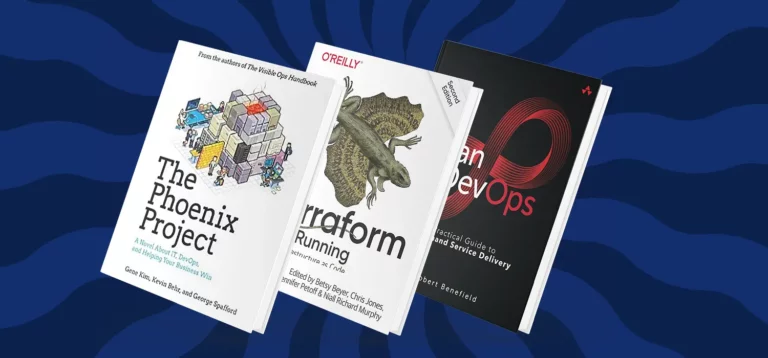
    • The Phoenix Project: A Novel About IT, DevOps and Helping Your Business Win
    • The Phoenix Project is legendary for bringing DevOps to life through the engaging story of IT Manager Bill, who is up against time and budget as he takes on the business-critical Phoenix Project. Sure to resonate with anyone who has worked in IT, this fast-paced read will help you improve your own organization’s IT.
    • Author Gene Kim has gone on to give software development similar treatment in The Unicorn Project, which is another enlightening read.

    Site Reliability Engineering

    Recommended by: Faheem Memon | Sr Platform Engineer Sr Manager | Comcast

    • Site Reliability Engineering by Niall Richard Murphy, Betsy Beyer, Chris Jones, Jennifer Petoff
    • Google’s blueprint for running production systems reliably at scale
    • Mainly focus on Balancing operational demands with scale

    Terraform: Up & Running – Scalable Concepts Testing

    Recommended by: Ori Yemini I CTO & Co-Founder I ControlMonkey

    • Terraform: Up & Running by Yevgeniy Brikman
    • Hands-on Terraform reference for scalable, production-ready infrastructure
    • Concepts remain relevant beyond Terraform 1.0 – especially around scale, testing, and modularity.
    • Many tips and ideas for team collaboration in Terraform workflows

    Lean DevOps

    Recommended by: Alexandre Cravid I DevOps & Cloud Architect I Celfocus

    • Lean DevOps by Robert Benefield
    • Practical strategies for building DevOps into enterprise delivery — without slowing teams down or losing control.
    • Mainly focus on Creating flow across dev and ops without overengineering. Reduces delivery friction while preserving governance and stability.

    Team Topologies: A DevOps Book on Team Structure for Directors

    Recommended by: Aharon Twizer I CEO & Co-Founder I ControlMonkey

    • Team TopologiesOrganizing Business and Technology Teams for Fast Flow
    • Now that you know how to measure software delivery, learn how to build and manage the right team to deliver it.
    • Manuel Pais and Matthew Skelton offer their consultancy expertise in this step-by-step guide to organizational design and team interaction.
    • The book offer a range of different team types and interaction patterns so you can choose the approach that relates most closely to your organization and take practical steps to implement it.

    Accelerate: A Must-Read DevOps Book for Data-Driven Leaders

    • AccelerateThe Science of Lean Software and DevOps: Building and Scaling High Performing Technology Organizations
    • How does software delivery impact business performance and drive business value? In this book, author Gene Kim teams up with Jez Humble and Dr. Nicole Forsgren. Dr. Forsgren helped create the DORA metrics. These metrics are important for measuring how well software delivery teams perform. The book also shows where to invest to make improvements.

    Infrastructure as Code: Strategic IaC for DevOps Leadership

    • Infrastructure as Code: Designing and Delivering Dynamic Systems for the Cloud Age
    • Kief Morris has updated his 2016 IaC guide for 2025. The new edition recognizes the risks of infrastructure sprawl and the need to consolidate cloud-based systems to support sustainable growth while managing costs.
    • Exploring core concepts, infrastructure architecture, patterns for building architecture and infrastructure automation via tools like Terraform, this is a timely update for DevOps engineers looking to build strategic knowledge and support their business to develop resilient, sustainable and scalable cloud infrastructure.
    • Available now on pre-order, launching 22 April 2025

    Cloud Governance Book: Best Practices for DevOps Directors

    • Cloud Governance: Basics and Practice
    • Improve your cloud governance knowledge with this practical, user-friendly guide that provides a comprehensive understanding of governance practices tailored to the cloud era. It covers frameworks, compliance, security, and cost management strategies essential for managing cloud environments effectively.
    • Authors Steven Mezzio and Meredith Stein focus on aligning governance with business objectives while maintaining flexibility and scalability in cloud operations. Great for underlining the link between practical cloud governance and the wider corporate governance environment.

    Building a Cloud Infrastructure Backup Strategy

    • Building a Cloud Infrastructure Backup Strategy by Aharon Twizer
      This free DevOps book gives leaders a practical blueprint to build a fully automated cloud disaster recovery strategy using Infrastructure as Code (IaC), automated backups, and continuous compliance.
    • The guide covers:  How to restore configurations, not just data — protect your VPCs, IAM roles, DNS settings, and more. Tips to eliminate downtime and SLA breaches — using automated snapshots, rollback mechanisms, and IaC.Ways to achieve resilience without complexity — reduce manual work, prevent drift, and optimize provisioning.
    • Free book with no cost.

    Effective DevOps

    • Building a Culture of Collaboration, Affinity, and Tooling at Scale
    • DevOps as a Culture Shift, Not a Toolkit: This book reframes DevOps as a mindset and organizational movement, emphasizing that sustainable transformation comes from within—through collaboration, shared goals, and cultural alignment—not by hiring experts or deploying flashy tools.
    • Practical Strategies for Real-World Impact: Backed by case studies, the authors offer actionable guidance to dissolve silos, promote psychological safety, and scale what works—helping teams build lasting relationships and systems that evolve with the organization’s needs.
    • Authors: Jennifer Davis and Ryn Daniels

    97 Things Every Cloud Engineer Should Know

    Recommended by: Yuval Margoles – Master Backend at ControlMonkey

    • Collective Wisdom from the Experts, collected by Emily Freeman
    • A curated collection of field-tested lessons from 97 engineers worldwide — from serverless anti-patterns to culture-first engineering. Each short article brings a practical lens to cloud design, architecture, and scale.
    • Ideal for SREs, DevOps, and platform teams looking to sharpen judgment, spot pitfalls, and build resilient systems through lived experience—not just theory.

    Each of these books helps you grow as a DevOps Director. They give you the knowledge to lead, scale, and manage cloud infrastructure well

     Top DevOps Communities for DevOps Directors and Engineers

    There’s nothing better than learning from people who are already in the roles you aspire to. Community groups often offer a realistic, warts-and-all perspective on DevOps careers. Here are some of the most popular groups across different platforms:

    • DevOps on Reddit: Now fifteen years old and with more than 386k members r/devops covers “everything DevOps”. From trouble-shooting technical issues to career advice and salary comparisons, you’ll find the unvarnished truth here.
    • Three DevOps Groups to Join on LinkedIn:
      • DevOps and SRE Discussions is an active public group whose 251k members aim to cover quality discussions and resources around DevOps, SRE, MLOPS, Gitops, CNCF initiatives and cloud platforms.
      • DevOps is tightly focused on networking, discussion and news around DevOps, CI/CD, Automated Security and Modern Infrastructure.
      • Cloud Native Application Delivery and DevOps is another popular group offering resource for people managing and deploying software in the cloud.
    • Slack communities for DevOps Engineers:
      • DevOps Chat: A well-moderated Slack group where professionals discuss various DevOps topics, as well as jobs and events related to DevOps.
      • SweetOps: A collaborative community for engineers focusing on DevOps best practices and tools.
      • KodeKloud CommunityA popular platform for knowledge sharing and guidance
    • Dedicated communities for DevOps Engineers:
      • DZoneJoin 2 million developers in the DZone community that includes news, articles, research, webinars and other free resources created for software engineering professionals.
      • Platformengineering.org: Here is another community packed with resources for aspiring and experienced DevOps professionals.

    Best Webinars for DevOps Directors: Leadership & Cloud Governance

    If you have an hour to spare, webinars are a great way for a DevOps Director to stay current on tools and future trends. Sign up with the following to get the latest:

    • DevOps.com: A real treasure trove that’s curated to cover a vast range of topics from technical to managerial, including news, opinion and best practice primers. The vendor-sponsored webinars also give you insight into what key vendors are introducing, which can be useful as you develop your specific tech skills.
    • Platform Engineering YouTube channel: You’ll find a bunch of useful webinars ranging from Platform Engineering 101 to “How to hack your manager” if you join the 26k subscribers to Platform Engineering’s dedicated channel.
    • DZone: Check out DZone’s library of on-demand webinars, fireside chats and roundtables.

    As you pursue your DevOps career, you’ll need to maintain and add to your skillset, and stay up-to-date with new technologies, techniques and timesavers that emerge.


    In more advanced positions, you will be evaluated on your ability to lead your team, the success of your projects, and your effectiveness in managing costs and risks. It’s essential to leverage all your acquired knowledge and ensure you are utilizing the appropriate tools to enhance your cloud governance and team management strategies.

    ControlMonkey is your DevOps career partner, helping automate and enforce cloud governance, providing visibility over security and compliance risks associated with cloud misconfigurations and drift, and ensuring the cloud environment is operating at maximum efficiency and optimum performance.

    Add ControlMonkey to your toolkit today. Book a demo.

    Bottom CTA Background

    A 30-min meeting will save your team 1000s of hours

    A 30-min meeting will save your team 1000s of hours

    Book Intro Call

      Sounds Interesting?

      Request a Demo

      Resource Blog News Customers Stories

      Updated: Aug 20, 2025 Upd: 20.08.25

      3 min read

      DevOps Emoji Glossary: From Terraform Plan to ClickOps Chaos

      Zack Bentolila

      Zack Bentolila

      Marketing Director

      DevOps Emoji Glossary: From Terraform Plan to ClickOps Chaos

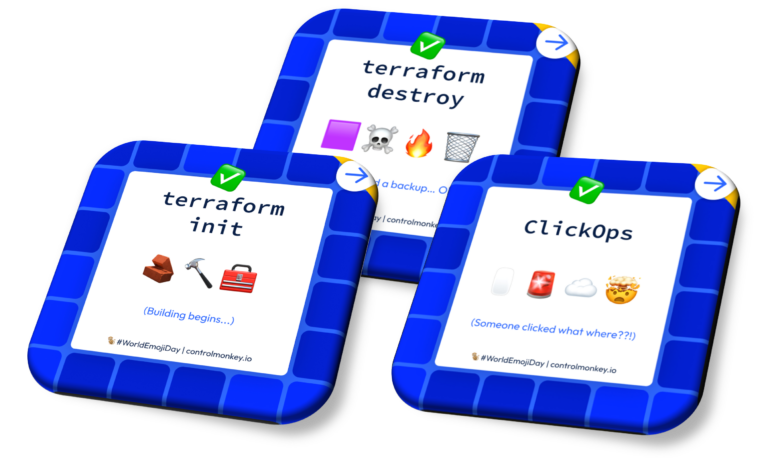
      For World Emoji Day, we broke down the highs, lows, and pitfalls of infrastructure as code — one emoji at a time.  The result: the first DevOps Emoji Glossary, built for anyone who’s faced IaC drift, broken pipelines, or unexpected automation outcomes.

      From terraform maps to firefighting misconfigurations, this glossary translates real infrastructure issues into emoji form. It also highlights areas like FinOps, Cloud DR, and IaC risk — because sometimes, the cloud really is too messy for words. 🧱🔥😵

      If you’re a DevOps Manager or part of a DevSecOps team, this one’s for you.

      Terraform and IaC Concepts in the DevOps Emoji Glossary

      terraform init – 🧱🔨🧰

      terraform plan – 🧠📜🤔

      terraform apply – 🚀🔁🏗️

      terraform destroy – 🟪☠️🔥🗑️

      Migrating to OpenTofu – 🟪 ➡️ 🟨

      Terraform Refresh – 🟪🚿☁️

      • terraform refresh updates your state file with reality. Sometimes that’s a comfort. Other times… surprise drift.
      • Terraform Refresh Docs 

      Terraform Maps – 🗺️🔢📦

      Terraform List – 🟪📋

      Drift – 😵🌀🙈

      ClickOps – 🖱️🚨☁️🤯

      IaC Risk Index – ⚠️📉🔐

      • IaC gives you power – but with power comes risk. Misconfigs, exposure, and missing guardrails aren’t just emoji-worthy… they’re real.

      DevOps and Cloud Topics in the Emoji Glossary

      GitOps – 🤖📥📦

      • GitOps is a deployment model where infrastructure is managed through pull requests and Git workflows. It brings automation and consistency — until someone force-pushes
      • CNCF GitOps Primer →

      FinOps – 💸📊🧮

      • FinOps helps teams optimize cloud spend and bring financial accountability to engineering. It’s where cost meets chaos.
      • What is Finops

      DevOps – 🧱🔧🚀

      • DevOps aligns development and operations through automation and tooling. It’s what makes infrastructure both faster — and more fragile.
      • DevOps – Defined

      DevSecOps – 🔐🧪⚙️

      DevOps Manager – 🧠📈🛠️

      SRE Manager – ⏱️💡🔧

      Cloud DR – ☁️💾♻️

      • Cloud Disaster Recovery isn’t just snapshots – it’s about recovering your config, state, and sanity.
      • Learn more about Cloud DR

      Download the DevOps Emoji Glossary PDF

      📥 Want this as a shareable visual deck for your team or Slack channel?

      Download the DevOps PDF 

      Explore More DevOps Emoji Chaos with ControlMonkey

      Want to see how ControlMonkey brings order to emoji-worthy cloud chaos? join our product showdown 

      Bottom CTA Background

      A 30-min meeting will save your team 1000s of hours

      A 30-min meeting will save your team 1000s of hours

      Book Intro Call

      Author

      Zack Bentolila

      Zack Bentolila

      Marketing Director

      Zack is the Marketing Director at ControlMonkey, with a strong focus on DevOps and DevSecOps. He was the Senior Director of Partner Marketing and Field Marketing Manager at Checkmarx. There, he helped with global security projects. With over 10 years in marketing, Zack specializes in content strategy, technical messaging, and go-to-market alignment. He loves turning complex cloud and security ideas into clear, useful insights for engineering, DevOps, and security leaders.

        Sounds Interesting?

        Request a Demo

        Resource Blog News Customers Stories

        Updated: Aug 24, 2025 Upd: 24.08.25

        8 min read

        How to Become an SRE Manager

        Zack Bentolila

        Zack Bentolila

        Marketing Director

        How to Become an SRE Manager

        Growth and Opportunities in SRE Manager Roles

        An SRE Manager is important for keeping an organization’s systems and services stable, reliable, and performing well. SRE Managers bridge the gap between DevOps teams, fostering collaboration and continuous improvement.

        As an SRE Engineer, becoming an SRE Manager is a great next step in your career and a good ambition to aim for. Read on to find out how you can progress.

        If being an SRE Manager isn’t for you, check out our career growth blogs. Learn how to transition to a Cloud Architect or a DevOps Director.

        SRE Managers are in High Demand

        As organizations increasingly rely on complex, scalable systems, the need for professionals who can ensure reliability and performance has grown significantly. The adoption of modern technologies like microservices, containers, and cloud has further fueled this demand.

        As a result, companies are actively hiring SRE Managers to optimize infrastructure, reduce downtime, and enhance user experience. Yet, the supply of qualified candidates has not kept pace. The 2023 Global SRE Survey revealed that 67% of organizations struggle to find skilled SRE talent, with 52% reporting difficulties in retaining those they do hire.

        Making the Leap From SRE Engineer to SRE Manager

        A career as an SRE Manager can be incredibly rewarding. The role is highly skilled and ideal for someone with strong leadership capabilities, technical expertise, as well as a passion for building reliable systems.

        You will be responsible for

        • Leading and mentoring a team of SRE Engineers.
        • Developing and enforcing SRE best practices and processes. Promoting a culture of learning and continuous improvement across teams.
        • Establishing clear policies for cloud usage, including access controls, resource allocation, and compliance requirements. These policies ensure that all teams adhere to best practices and robust cloud governance.
        • Leveraging monitoring tools and dashboards, to ensure real-time visibility into cloud environments. This helps detect anomalies, enforce governance policies, and maintain Service Level Objectives (SLOs).
        • Collaborating with development teams to build scalable and resilient systems.
        • Establishing and monitoring SLOs and Service Level Indicators (SLIs).
        • Responding to incidents and conducting post-mortems to prevent future issues and ensuring effective incident response.
        • Driving automation to enhance operational efficiency.

        Matching SRE Engineer Skills to an SRE Manager Role

        As an SRE Engineer, you will already possess many of the necessary skills.

        SRE Engineers already have a strong foundation in programming languages like Python, Go, or Java, and an understanding of system architecture, operating systems and networking.

        You will also have a solid grasp of infrastructure as code (IaC) tools such as Terraform and you will have mastered automation and be using CI/CD pipelines and tools like Jenkins, GitLab CI, or CircleCI. You will be familiar with monitoring and logging tools, such as Prometheus, Grafana, ELK Stack, or Datadog.

        SRE Engineers understand reliability practices and key concepts like Service Level Objectives (SLOs), Service Level Indicators (SLIs), and error budgets, what they mean and when you should use them.

        You should have hands-on experience with cloud platforms like AWS, Azure, or Google Cloud and you understand containerization and orchestration tools like Docker and Kubernetes.

        If you don’t think you have enough relevant experience, before making this step up, think about gaining further certifications such as:

        What Skills Do SRE Managers Need to Build?

        The step from engineer to manager marks a significant transformation – not just in responsibilities, but in mindset. While an SRE engineer focuses on the hands-on work of building, automating, and troubleshooting systems, an SRE Manager takes on the role of leading teams, driving strategy, and ensuring alignment with organizational goals. Below are a few tips to help guide your career progression:

        Deepen Your SRE Manager Expertise

        • Build further on SRE principles like SLOs, SLIs, error budgets, and incident management.
        • Demonstrate your ability to improve system reliability and implement automation solutions effectively.
        • Develop advanced cloud governance skills that go beyond technical expertise.

        Cultivate SRE Manager Leadership Skills

        • Gain experience in mentoring junior engineers and guiding projects.
        • Hone your communication skills to effectively collaborate across teams and articulate goals.

        Understand SRE Management Fundamentals

        • Learn about managing teams, resource allocation, and performance reviews.
        • Familiarize yourself with project management tools and methodologies, such as Agile or Scrum.
        • Understand how SRE aligns with business objectives, like customer satisfaction and cost management.
        • Ensure you have good cloud governance practices in place.
        • Gain insights into the priorities of other stakeholders, including product managers and executives.

        Demonstrate Initiative

        • Volunteer to lead initiatives, such as incident response improvements or system reliability audits.
        • Take ownership of processes and showcase your ability to manage responsibilities beyond your technical contributions.

        Strengthen Your Problem-Solving Skills

        Seek Feedback on Your SRE Manager Capabilities

        • Regularly solicit feedback from peers and managers on areas for improvement.
        • Pursue training or certifications focused on leadership, such as courses in team management or project leadership.

        The key is to demonstrate that you’re not only technically capable but also ready to lead a team, strategize, and align engineering goals with broader organizational objectives.

        What Challenges Will You Face as An SRE Manager?

        SRE Managers face a variety of challenges as they balance technical reliability with team leadership and organizational goals. Being prepared before you step into the role will help you be successful. Areas you’ll need to think about include:

        SRE Managers Must Balance Reliability and Innovation

        • Ensuring system reliability while supporting rapid development and deployment can be tricky. Managers often need to find the right balance between stability and innovation.

        Scaling Systems, Teams and Cloud Governance

        • As organizations grow, scaling infrastructure, ensuring appropriate cloud governance and managing larger teams become critical. This includes addressing technical bottlenecks and fostering collaboration across diverse teams.

        SRE Manager Must Handle High Pressure

        • Handling high-pressure incidents and ensuring effective post-mortem processes can be demanding. SRE Managers must ensure their teams are equipped to respond quickly and learn from failures.

        Solving the SRE Talent Shortage

        • We’ve already mentioned that there is a global SRE talent shortage. Finding and retaining skilled SREs is tough. Managers often need to invest in training and development to bridge skill gaps.

        Adapting to Emerging Technologies

        • Staying ahead of technological advancements, such as AI and cloud-native solutions, requires continuous learning and adaptation. For example, the company may decide to transition from traditional infrastructure to serverless architecture (e.g., AWS Lambda, Google Cloud Functions) to improve scalability and cost efficiency. The SRE Manager must guide the team through this significant technological shift so it can adapt to a serverless architecture.

        Maintaining Team Well-Being

        • In previous blog articles we’ve talked about how preventing burnout and promoting a healthy work-life balance is essential, especially in roles with on-call responsibilities.

        If solving these challenges sparks your interest, a career as an SRE Manager is for you!

        Support your SRE Manager Progression with ControlMonkey

        If you’re inspired to follow the SRE Manager career path, you’ll want to bring some smart tools and partners with you on the journey. ControlMonkey supports aspiring SRE Managers with solutions that help automate and enforce cloud governance, provide visibility over security and compliance risks, identify costly underused or redundant resources, and ensure the environment is operating at maximum efficiency, reliability and optimum performance.

        Want a partner to help you build your SRE Manager career? Book a ControlMonkey demo today.

        Bottom CTA Background

        A 30-min meeting will save your team 1000s of hours

        A 30-min meeting will save your team 1000s of hours

        Book Intro Call

        Author

        Zack Bentolila

        Zack Bentolila

        Marketing Director

        Zack is the Marketing Director at ControlMonkey, with a strong focus on DevOps and DevSecOps. He was the Senior Director of Partner Marketing and Field Marketing Manager at Checkmarx. There, he helped with global security projects. With over 10 years in marketing, Zack specializes in content strategy, technical messaging, and go-to-market alignment. He loves turning complex cloud and security ideas into clear, useful insights for engineering, DevOps, and security leaders.

          Sounds Interesting?

          Request a Demo

          Frequently Asked Questions: How to Become an SRE Manager

          You’ll need experience mentoring junior engineers, leading projects, and working closely with other teams. Good communication and understanding how to navigate cross-team priorities—like those from product managers or execs—are also important.

          Look for opportunities to lead initiatives that go beyond your hands-on work—things like improving incident response or running reliability audits. You’ll also need to connect your work to broader business goals, like keeping customers happy or controlling infrastructure costs.

          we wrote an article touches on this by highlighting the importance of work-life balance and managing on-call responsibilities so you and your team won’t burnout. Investing in team development and setting up the right support structures are part of the job.

          You’ll be juggling system reliability, team leadership, and business needs. Expect to deal with scaling issues, skill shortages, high-pressure incidents, and the constant evolution of cloud and DevOps technologies.

          Start by reinforcing best practices like SLOs, SLIs, and post-mortems. Lead by example when it comes to automation, governance, and learning from incidents. Reliability needs to be baked into everyday thinking.

          You should be familiar with tools like:

          • Terraform
          • Jenkins
          • GitLab CI
          • Prometheus
          • Grafana

          You should also know major cloud platforms like: AWS, Azure, or GCP. As a manager, doubling down on monitoring, automation, and governance tools will help you lead more effectively.

          An SRE Manager leads a team of Site Reliability Engineers to ensure system reliability, scalability, and performance. They define SLOs/SLIs, manage incidents, enforce automation standards, and align engineering practices with business goals like cost efficiency and compliance.

          An SRE Engineer focuses on building and automating reliable systems. An SRE Manager, on the other hand, leads teams, defines reliability strategy, aligns technical work with business goals, and ensures governance and compliance across environments.

          Similar or related titles include:

          • Site Reliability Engineering Manager
          • Cloud Platform Engineering Manager
          • DevOps Manager
          • Infrastructure Engineering Lead

          Each may focus on slightly different areas like cloud cost, automation, or compliance.

          Resource Blog News Customers Stories

          Updated: Aug 25, 2025 Upd: 25.08.25

          8 min read

          How DORA and Cloud Governance Prevent DevOps Burnout

          Zack Bentolila

          Zack Bentolila

          Marketing Director

          How DORA and Cloud Governance Prevent DevOps Burnout

          DORA explains how improved cloud governance can combat burnout and boost DevOps efficiency.

          The Google DORA (DevOps Research & Assessment) Community provides opportunities to learn and collaborate on Cloud Governance solution, software delivery, operational performance and continuous improvement. Its State of DevOps 2024 report delves into ways to increase DevOps resilience, wellbeing and efficiency.

          The report found a significant portion of DevOps professionals are experiencing burnout – a state of emotional, physical, and mental exhaustion caused by excessive stress. This results in low productivity, a drop in morale, potential job hopping as well as issues and mistakes that can impact compliance, cloud governance and security.

          Teams that cultivate a stable and supportive environment that empowers DevOps to excel drive positive outcomes. This blog looks at practical ways to reduce burnout in your DevOps team by improving cloud governance through Terraform automation and implementing a proactive DevOps strategy.

          More Code, More Cloud, More Burden

          In mature cloud deployments, scale brings complexity, as more cloud accounts, regions and users are added, and configurations evolve. DevOps find it harder to manage large-scale environments, especially when configurations are not managed by Infrastructure-as-Code (IaC) resources, so they gradually spiral out of control.

          Consequently, DevOps find their cloud infrastructure is not serving the business efficiently or safely. With cloud governance out-of-control, workloads continue to grow at an alarming rate.

          The Hidden Risks of Weak Cloud Governance in DevOps Teams

          According to DORA:

          • Work overload – A move-fast-and-constantly-pivot mentality negatively impacts well-being
          • Lack of control – DevOps find they are firefighting daily with an ongoing chase of continuously scaling more and more
          • Poor project management – Poor planning and unrealistic deadlines
          • High stress – The fast paced nature of DevOps leads to a constant state of pressure
          • Bad culture – Unrealistic expectations, lack of support and a general feeling of being treated unfairly

          The net result of this is that performance starts to dip and burnout creeps in. At the same time, weak cloud governance contributes to uncertainty and a lack of control.

          The DORA report outlines the correlation between organizational culture and burnout levels, recommending that organizations can combat burnout by:

          • Fostering a healthy DevOps culture
          • Providing better tools to support DevOps teams, strengthen cloud governance, and deliver operational excellence.

          Why Poor Cloud Governance Solutions Leads to DevOps Burnout & Compliance Failures

          Tackling DevOps burnout is important because it has real-world implications. Overworked teams become a bottleneck as they can’t handle the volume and frequency of infrastructure-related tickets. Cloud infrastructure is unable to scale, and cloud governance suffers as DevOps can’t easily detect or remediate cloud drifts and other problems.

          Changes in infrastructure risk breaking cloud governance, compliance and/or best practices. Demotivated DevOps teams have no time to focus on strategic projects, putting a brake on innovation and strategic ambitions. Worse still, individuals could walk out the door at any moment, causing even more resource issues as they take vital corporate knowledge with them.

          Most companies with mature cloud environments carry legacy infrastructure that is often retained in DevOps minds and inadequately documented. Teams desperately need real-time insights to bridge the gap between strategic initiatives and daily operations.

          Infrastructure as Code (IaC) for Scalable & Secure Cloud Governance Solution

          Today, the market has shifted towards automation and IaC is a journey, deemed as the present and future of cloud infrastructure engineering.

          IaC standardizes and automates infrastructure management, delivering visibility and reducing risk. This enables teams to scale more easily across cloud environments, building repeatable processes and operational excellence.

          However, this is only the first building block to deliver infrastructure at scale. Most of today’s IaC automation tools are point solutions only partially resolving cloud problems. To deliver effective IaC and adopt scalable cloud governance solutions, automation must be end-to-end and completely controlled

          Terraform Automation for Cloud Governance & Compliance: Key Benefits

          Terraform automation enhances cloud compliance and governance by enabling the definition and management of cloud infrastructure through code.  This allows for consistent deployments, automated compliance checks, clear audit trails, and the ability to enforce security policies across all environments. In turn, this leads to better control and visibility over cloud resources and minimizes the risk of human error in infrastructure management. It also enables:

          1. Policy as code
            • The creation of custom security and compliance policies that can be integrated into the infrastructure provisioning process, automatically identifying and preventing potential misconfigurations.
          2. Drift Detection
            • Detects discrepancies between the desired state of infrastructure defined in code and the actual deployed state, allowing for proactive remediation of unauthorized changes.
          3. Centralized Management
            • With Terraform, managing cloud resources across multiple cloud providers and environments can be done from a single pane, simplifying administration and ensuring consistent cloud governance practices.
          4. Role-Based Access Control (RBAC):
            • By assigning permissions based on user roles, Terraform helps enforce granular access controls to infrastructure, preventing unauthorized modifications.
          5. Self-service IaC
            1. Terraform automation enables standardized, compliant infrastructure provisioning to remove DevOps bottlenecks. Developers can self-serve infrastructure that complies with regulations such as PCI-DSS, HIPAA, and GDPR, without having to consult DevOps.

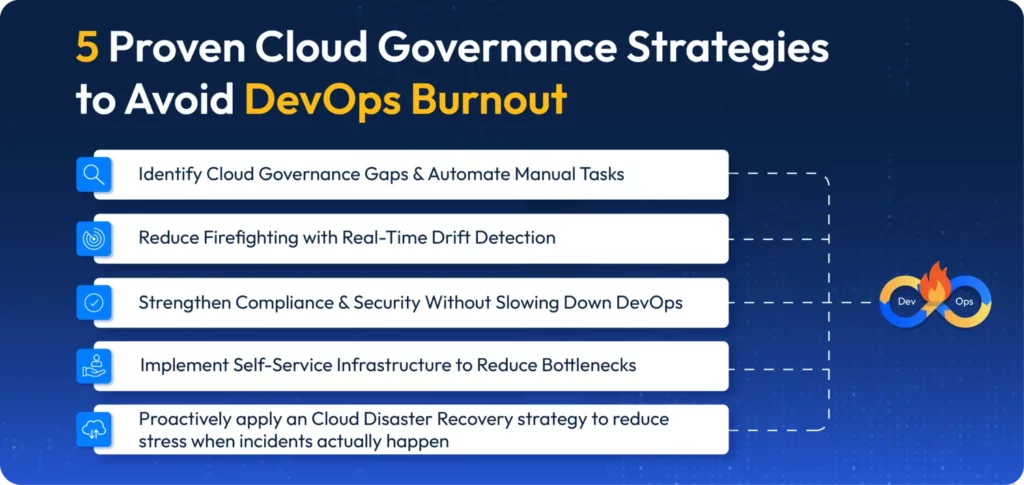
          5 Proven Cloud Governance Strategies to Avoid DevOps Burnout

          Cloud governance gaps create compliance risks, inefficiencies, and excessive manual work—all of which contribute to DevOps burnout. By applying proactive automation and governance strategies, teams can reduce stress, increase efficiency, and improve cloud security. Here’s what DevOps leaders should focus on:

          1. Identify Cloud Governance Gaps & Automate Manual Tasks

          DevOps teams often get bogged down handling repetitive governance and compliance tasks manually, leading to inefficiencies and burnout.

          Key tips:

          • Run an audit of infrastructure tickets—identify tasks that can be automated (e.g., repetitive IAM role assignments, security group modifications, environment provisioning).
          • Implement ticket automation with Terraform workflows or internal bots to reduce manual approvals.
          • Track the percentage of infrastructure requests automated versus those that are handled manually—aim to increase automation coverage over time.

          2. Reduce Firefighting with Real-Time Drift Detection

          Drift detection ensures cloud environments match IaC definitions, preventing unexpected changes that lead to compliance failures and security risks.

          Key tips:

          • Look into a drift detection tool (e.g., ControlMonkey, Open Policy Agent) to automate drift monitoring and remediation.
          • Run a bi/weekly drift audit—compare Terraform state with live cloud environments and auto-correct unauthorized changes.
          • Track the time your team is spending resolving drift-related incidents – the less manual intervention, the less burnout, and this strengthens governance.

          3. Strengthen Compliance & Security Without Slowing Down DevOps

          Security and compliance enforcement often slows down deployments when handled manually – automating these processes ensures governance without creating friction.

          Key tips:

          • Look into policy-as-code (e.g., Terraform Sentinel, Open Policy Agent) to automate compliance checks pre-deployment.
          • Run compliance tests in staging before production—ensure infrastructure meets SOC 2, HIPAA, or CIS benchmarks automatically.
          • Track policy violations caught pre-deployment versus post-deployment: the goal is to shift security left and reduce last-minute rollbacks.

          4. Implement Self-Service Infrastructure to Reduce Bottlenecks

          DevOps teams shouldn’t be gatekeepers for every infrastructure request – self-service IaC enables developers to provision resources safely without delays. Your team shouldn’t be bogged down with an overload of tickets – they need this valuable time back!

          Key tips:

          • Set up a self-service IaC catalog (e.g., pre-approved Terraform modules, AWS Service Catalog or even ControlMonkey) so developers can deploy infrastructure without DevOps intervention.
          • Run a monthly audit of provisioning requests – identify repetitive approvals, many of which can be automated.

          5. Prevent Incidents & Reduce Stress with Automated Rollbacks

          Handling cloud failures manually increases downtime and stress – automated recovery ensures stability and confidence in cloud governance.

          Key tips:

          • Disasters happen – enable daily Terraform state backups to allow instant rollback in case of infrastructure failures. This saves your team time in advance.
          • Periodically undertake a disaster recovery drill – test restoring infrastructure from backups to ensure rollback readiness. There will be key learnings to be gained from such an exercise.
            • Aim for under 10 minutes to minimize disruption and reduce operational stress.

          Enterprise Adoption of Terraform for Cloud Governance and Compliance

          Cloud governance isn’t just about controlling infrastructure—it’s about empowering DevOps teams to focus on innovation instead of firefighting.

          • Terraform automation eliminates governance bottlenecks, ensuring that compliance, security, and infrastructure provisioning happen proactively rather than reactively.
          • A proactive DevOps culture reduces burnout, shifting teams away from manual fixes and last-minute compliance checks toward automated, scalable infrastructure management.

          With the right cloud governance strategy, enterprises can achieve both control and efficiency, giving DevOps teams the tools they need to succeed.

          This is the start of the infrastructure delivery revolution. DevOps teams are already reaping productivity and efficiency benefits with better cloud cost management, 30% increase in productivity and a 3x boost in deployment speed, plus 100% cloud configuration backup.

          Avoid stress and burnout and build the right culture and environment to empower your team. Fix your past cloud governance and compliance issues and stop them happening again in the future.

          Get peace of mind with ControlMonkey

          Ready to Automate Your Cloud Governance Strategy? Download our free guide to mastering Infrastructure as Code (IaC), preventing drift, and automating compliance with Terraform. Or book a live demo to see Terraform automation in action

          Bottom CTA Background

          A 30-min meeting will save your team 1000s of hours

          A 30-min meeting will save your team 1000s of hours

          Book Intro Call

          Author

          Zack Bentolila

          Zack Bentolila

          Marketing Director

          Zack is the Marketing Director at ControlMonkey, with a strong focus on DevOps and DevSecOps. He was the Senior Director of Partner Marketing and Field Marketing Manager at Checkmarx. There, he helped with global security projects. With over 10 years in marketing, Zack specializes in content strategy, technical messaging, and go-to-market alignment. He loves turning complex cloud and security ideas into clear, useful insights for engineering, DevOps, and security leaders.

            Sounds Interesting?

            Request a Demo

            FAQ – Frequently Asked Questions on DevOps Burnout

            DevOps burnout often stems from constant firefighting, unrealistic delivery pressures, and a lack of control over increasingly complex cloud environments. As teams scale, poor cloud governance and manual processes create inefficiencies, leading to chronic stress, fatigue, and eventually burnout.

            Without strong governance, cloud environments quickly become chaotic—configurations drift, security gaps widen, and DevOps teams are stuck solving the same problems repeatedly. This lack of structure and control creates a high-pressure environment that drains energy and undermines morale.

            The DORA (DevOps Research & Assessment) report highlights that poor organizational culture, lack of support, and high workload contribute to burnout. It also points to better tooling, including cloud governance solutions, as essential for improving DevOps well-being and performance.

            Automation eliminates repetitive tasks, reduces the margin for error, and helps teams scale cloud environments without increasing pressure. Tools like Terraform automation handle compliance checks, drift detection, and provisioning—so DevOps can spend more time building and less time babysitting infrastructure.

            Warning signs include constant last-minute fixes, high ticket volumes for routine changes, missed deadlines, increased turnover, or a general drop in morale. If your cloud governance is reactive instead of proactive, burnout is likely not far behind.

            Policy-as-code tools automatically enforce compliance and security standards, reducing the mental burden on DevOps teams. By flagging misconfigurations before deployment, they prevent last-minute rollbacks and firefighting, which are key stress drivers.

            Self-service infrastructure removes DevOps bottlenecks by letting developers safely deploy resources themselves. This frees up DevOps to focus on higher-value work and reduces the workload imbalance that often leads to burnout.

            Resource Blog News Customers Stories

            Updated: Aug 24, 2025 Upd: 24.08.25

            8 min read

            How to Become a Cloud Architect

            Zack Bentolila

            Zack Bentolila

            Marketing Director

            How to Become a Cloud Architect

            Growth and Opportunities in Senior Cloud Careers

            If you’re a DevOps professional looking to pursue a fulfilling career, becoming a cloud architect is a great ambition. Skilled cloud professionals are in high demand as businesses spend record sums on the cloud and need cloud architects to deliver a return on their investment. Cloud architect regularly top the list of highest-paying and most-wanted skills, so if you want to supercharge your career and earning potential, read on!

            The role of cloud architect is highly skilled and plays an important part in business strategy and cloud governance. Cloud architects are responsible for directing the organization’s cloud journey by:

            • Leading the effective design and delivery of the company’s cloud infrastructure
            • Implementing and maintaining robust cloud governance and compliance with regulatory standards
            • Anticipating future needs for scalability, security, and resilience

            Good cloud architecture unlocks the true value of cloud computing, meaning cloud architects are important leaders who must have a range of skills to succeed. This blog charts a career path to becoming a cloud architect, detailing the technical, business, and leadership skills you need to develop.

            Career Paths for Cloud Architects

            Cloud architects can follow a variety of different pathways into the role. They often start in IT, progressing from entry-level to mid-level, before specializing in cloud support, becoming a cloud engineer before reaching the goal of cloud architecture.

            • Cloud support: In this role, you will maintain cloud-based technologies and services, trouble-shooting where needed with a focus on security, reliability, and performance. You’ll become an expert in application support, incident investigation, resolving user issues, and performance monitoring.
            • Cloud engineer: As a cloud engineer, you’ll move from providing purely tactical support into more strategic projects. You’ll get involved in designing and planning cloud solutions that meet the needs of business stakeholders. Implementation and deployment will be core duties, as well as trouble-shooting as issues arise. You will be aware of cloud environment KPIs and cloud governance policies designed to achieve them. You’ll focus on optimizing cloud infrastructure and minimizing risks and costs.

            As you become more experienced in this role, you can start to assess your capabilities against the requirements for the next step on the career ladder: Cloud Architect. We’ve outlined the skills you need below.

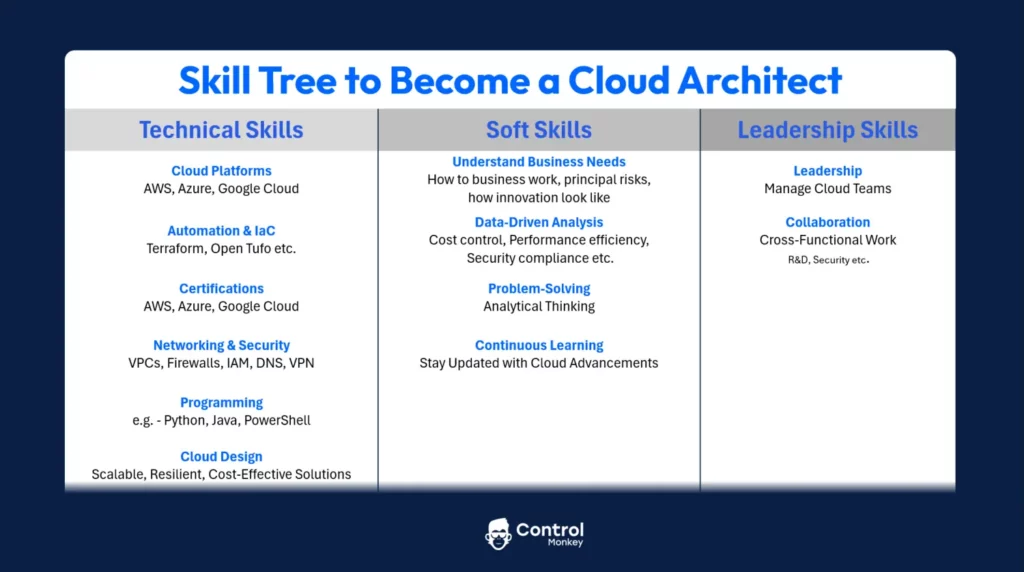
            Technical Skills for Cloud Architects

            If you are already in a mid-level DevOps role, you are in a strong position to transition towards a cloud architect position. Here are key technical areas to focus on to make the transition:

            1. Build on Your Existing Cloud Skills

            • DevOps skills are highly transferable to cloud architect roles. Make sure you continue investing in DevOps training
            • As a DevOps professional, you already have a strong foundation in areas like automation, CI/CD, IaC. These are highly relevant to cloud architecture. Gain proficiency in at least one major cloud platform such as AWS, Azure, or Google Cloud.

            2. Get Certified as a Cloud Architect

            Undertaking cloud architecture qualifications alongside your day-to-day role helps you make connections between what you’re doing now, and where you want to be. The following certifications offer a rigorous assessment of your skills:

            3. Deepen Your Knowledge in Key Areas

            Cloud architects must have a broad knowledge base across the following areas:

            • Networking and Security: Understand VPCs, subnets, firewalls, and security best practices. Be confident in concepts like DNS and TCP/IP alongside Identity and Access Management, VPN and in-plane switching (IPS) systems.
            • Programming and Scripting: Proficiency in languages like Python, Java, or PowerShell.
            • Enterprise computing: Understand the vagaries of different operating systems.
            • Cloud Design Patterns: Learn how to design scalable, resilient, and cost-effective cloud solutions using cloud design patterns.

            Learning by doing is often the most effective tactic, so as you develop your skills aim to work on cloud projects as much as possible, either through your current role or by contributing to open-source projects.

            Business Skills for Cloud Architects

            Commercial acumen is essential for cloud architects because your work directly impacts company costs, operational capability, and revenue-earning potential. Cloud architects must therefore:

            1. Understand the business

            • Learn how the company makes money, what its strategic objectives are, and how the right cloud architecture contributes to this.
            • Understand how cloud architecture goals align with business goals in terms of innovation, delivering migration projects and future-proofing the cloud environment, as well as cost control, security resilience and cloud governance.
            • Learn the principal risks associated with the business and where these intersect with cloud security, resilience and capacity.

            2. Learn to speak in metrics that executives care about

            • Executives care about revenue, customer satisfaction, and cost. Learn how to translate cloud architecture work into these outcomes by making a direct link from those business drivers to resilience, availability, and scalability.

            3. Develop data-driven analysis reporting skills

            • Understand how to collect and analyze performance data and translate it into a narrative that makes sense to business leaders.
            • Report regularly on KPIs selected for their relevance to business objectives.
            • Regularly reassess and review KPIs to make sure they are still tracking the right issues.

            Soft Skills for Cloud Architects

            While technical and business skills are important for cloud architects, it is soft skills that ensure the job gets done effectively and performance is maintained over the long term. Key soft skills you’ll need in your cloud architect role are:

            • Leadership

            You’ll be managing a team of cloud engineers and supporting roles, so you need to be able to create a vision and inspire others to follow it. You need to understand and empathize with challenges and solve problems to support your team, as well as show strong project management and delegation skills to maximize team performance.

            • Collaboration and Communication

            You’ll need to work with various stakeholders across the business from a variety of technical and non-technical backgrounds including product, R&D, security, commercial and legal stakeholders. This will require a variety of different communication styles and understanding of what matters to each stakeholder. You’ll need to be able to resolve tension and agree consensus between groups with sometimes competing objectives.

            • Analytics and Problem-solving

            You should be able to analyze strategic and tactical requirements and translate them into a practical cloud architecture approach. A creative mindset is important to solving problems and integrating new technologies and approaches.

            • Enthusiasm for Continuous Learning

            Cloud technology is constantly evolving and there is always something new to learn to make sure you’re doing the best job you can. Follow industry news, join professional cloud communities such as the Google Cloud CommunityAWS community, and the Cloud Native Computing Foundation, and participate in webinars and conferences to stay current. Connect with professionals in the field through LinkedIn, industry events, and local meetups.

            📙 Looking for the best DevOps books and cloud governance webinars for your next leadership step? This curated list is for you.

            What Challenges Will You Face as A Cloud Architect?

            Any job worth doing will have its challenges. Areas where cloud architects can expect to meet them include:

            Cloud governance, regulation and cost optimization

            The cloud environment must be well-governed and compliant with regulations, while also meeting cost optimization targets. These objectives can sometimes compete with each other and finding a route through is a key cloud architect skill. You also require legal, financial and automation expertise.

            Essential KPIs for Cloud Architects

            • Cloud migration goals: Are planned migrations completed successfully and on time?
            • Cloud governance: Is the environment well-documented, controlled and managed? Are incidents identified, resolved and reported rapidly and in line with regulatory requirements?
            • Cost control: Are resource efficiencies achieved to minimize spend without compromising performance?
            • Cloud Innovation: Is there a defined roadmap for new technology rollout and adoption and is the business following it?
            • Performance efficiency: Is the cloud meeting targets for application load and server response times?
            • Security compliance: Is the cloud compliant with key security standards and passing audits successfully?

            If solving these challenges sparks your enthusiasm, a career as a cloud architect is for you!

            Support your Career Progression with ControlMonkey

            If you’re inspired to follow the cloud architect career path, you’ll want to bring some smart tools and partners with you on the journey. ControlMonkey supports aspiring cloud architects with tools that help automate and enforce cloud governance, provide visibility over security and compliance risks associated with cloud misconfigurations and drift, identify costly underused or redundant resources, and ensure the cloud environment is operating at maximum efficiency and optimum performance.

            Want a partner to help you build your cloud architect career? Book a ControlMonkey demo today.

            Want to learn how to become DevOpד Director? this blog is for you

            Bottom CTA Background

            A 30-min meeting will save your team 1000s of hours

            A 30-min meeting will save your team 1000s of hours

            Book Intro Call

            Author

            Zack Bentolila

            Zack Bentolila

            Marketing Director

            Zack is the Marketing Director at ControlMonkey, with a strong focus on DevOps and DevSecOps. He was the Senior Director of Partner Marketing and Field Marketing Manager at Checkmarx. There, he helped with global security projects. With over 10 years in marketing, Zack specializes in content strategy, technical messaging, and go-to-market alignment. He loves turning complex cloud and security ideas into clear, useful insights for engineering, DevOps, and security leaders.

              Sounds Interesting?

              Request a Demo
              Cookies banner

              We use cookies to enhance site navigation, analyze usage, and support marketing efforts. For more information, please read our. Privacy Policy