![Rubrik vs. Veeam: Which Platform Offers Better Value For Money? [2026]](https://controlmonkey.io/wp-content/uploads/2026/03/Rubrik-vs.-Veeam.png)
The Veeam vs. Rubrik decision comes down to a trade-off that neither vendor’s sales team will frame honestly for you:
Deployment flexibility and lower entry cost on one side, structural security and operational simplicity on the other.
This guide puts both platforms side by side on features, integrations, pricing, and what real G2 reviewers are saying in 2026.
I’ll also cover the one layer of disaster recovery that both platforms leave unprotected and what to do about it.
TL;DR
- Veeam is a flexible enterprise backup platform. Software-only, hardware-agnostic, runs natively on Linux as of v13, and supports more hypervisors than many of its competitors.
I’d go for Veeam if I need multi-hypervisor coverage without hardware lock-in and want granular control over my backup architecture.
- Rubrik built its platform around structural security. Every backup is immutable by default. The SLA policy engine automates scheduling, retention, and replication, and the Annapurna RAG platform opens backup data to GenAI applications.
I’d go for Rubrik if ransomware protection is my top priority and I want a management experience that mostly runs itself.
- ControlMonkey isn’t a replacement for either Veeam or Rubrik. It’s the missing layer. Both platforms protect your data.
ControlMonkey protects what your data runs on: VPCs, IAM policies, DNS records, security groups, and SaaS configurations across AWS, Azure, GCP, and 30+ third-party platforms.
I’d go for Rubrik + ControlMonkey if I want immutable data security paired with full infrastructure recoverability in the same DR strategy.

Get complete disaster recovery for your cloud
Rubrik answers: “Can I get my data back?” ControlMonkey answers: “Can I get my infrastructure back?”
Together, they give you complete disaster recovery.
Veeam vs. Rubrik: Features
Here’s a bird’s-eye view of how Veeam and Rubrik stack up:
| Rubrik | Veeam | ControlMonkey | |
|---|---|---|---|
| Core Data Protection | SLA-driven policy engine with incremental-forever backups. Live Mount for near-instant VM and database recovery. Immutable by default. | Changed-block tracking with synthetic full backups. Instant Recovery for VMs. Immutability available but requires manual configuration | Not a data backup tool. Protects infrastructure configuration with daily Terraform-based snapshots stored in your own Git repository. |
| Cloud Integration & Modern Workloads | Unified RSC platform covering AWS, Azure, GCP, and Oracle Cloud. Exocompute framework for cloud-native processing. Protects EC2, EBS, RDS, DynamoDB, and S3. | Separate cloud products per provider (Backup for AWS v10, Azure v8.1, GCP v7). Each requires its own deployment and management. | Backs up infrastructure configuration across AWS, Azure, GCP, and 30+ third-party platforms, including Datadog, Cloudflare, Okta, and Confluent. |
| Management & Usability | Single SaaS console (RSC) with Google-like search. SLA Domains automate policy assignment with Gold, Silver, and Bronze tiers. Minimal daily administration. | New HTML5 web console in v13 alongside legacy Windows console. More configuration options, but more complexity. Six separately deployable products. | Cloud Resilience Dashboard, which provides a single pane of glass for DR readiness across all cloud accounts and third-party platforms. |
| Security & Ransomware Protection | Zero-trust architecture with immutable Atlas file system, Cloud Vault (air-gapped storage), retention lock, and $10M ransomware warranty. Turbo Threat Hunting scans 75,000 backups in under 60 seconds. | Recon Scanner 3.0 with MITRE ATT&CK mapping, inline entropy scanning, and YARA rule support. AI Malware Agent classifies threats and identifies clean restore points. | Drift detection and auto-remediation catching unauthorized configuration changes in real-time. Prevents misconfigurations from becoming security incidents or outages. |
| Disaster Recovery (DR) | Orchestrated failover with Live Mount and instant recovery. Strong for VM and database-level DR. No infrastructure config backup. | Recovery Orchestrator with automated compliance documentation. Partial VPC config backup for AWS. No IAM, DNS, or broad infrastructure recovery. | One-click infrastructure recovery to any previous known-good state. Restores VPCs, IAM, DNS, security groups, load balancers, and SaaS configs. |
| Scalability & Performance | Scale-out appliance architecture. Add capacity by adding nodes. Horizontal scaling to thousands of nodes. | Software-defined architecture decouples compute from storage. Scales on any x86 hardware. | Scales across multi-cloud and multi-account environments without additional infrastructure. |
| Cloud Configuration Backup | Not available. | Partial VPC backup for AWS only (excludes firewall rules, DNS Firewall, flow logs, transit gateway policies). | Full cloud configuration backup across all major providers and SaaS platforms, stored as Terraform code. |
| Control Plane Recovery | Not available. | Not available beyond partial VPC topology. | Full control plane recovery (networking, identity, DNS, CDN, policies) with one-click restore. |
| DR Visibility | Backup job monitoring and compliance reporting. | Recovery Orchestrator dashboards (Premium tier). | Real-time executive view of infrastructure readiness across all accounts. Shows IaC coverage gaps and recovery readiness. |
| Cloud Coverage | AWS, Azure, GCP, Oracle Cloud. | AWS, Azure, GCP. | AWS, Azure, GCP, plus 30+ third-party SaaS platforms. |
| Active Governance | Data security posture management (DSPM). Sensitive data discovery. | Veeam ONE monitoring and alerting. | Continuous drift monitoring with automatic remediation through Git-based pull requests. Policy enforcement across environments. |
Rubrik’s Features
Zero-Trust Data Security Architecture
The security posture separates Rubrik from every other backup vendor on the market.
Rubrik’s proprietary Atlas file system stores backup data in an append-only, immutable format. Data can’t be modified, encrypted, or deleted by attackers or rogue insiders. This isn’t a feature you enable in settings. The immutability is baked into the architecture itself.
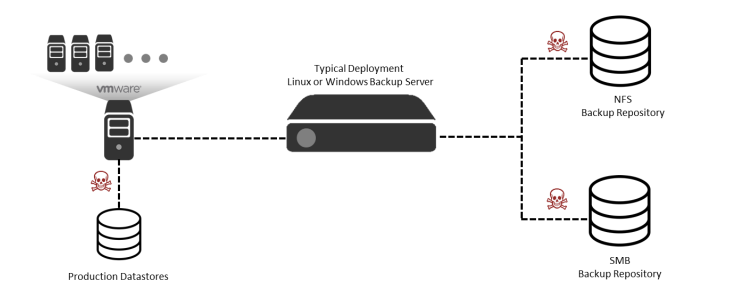
Rubrik Cloud Vault provides fully managed, logically air-gapped backup storage in AWS and Azure.
Retention lock prevents anyone from deleting backups before their retention window expires.
Not admins. Not anyone with root access. Nobody.
As an Enterprise Edition customer, you’d also get a $10 million ransomware recovery warranty.
On the detection side, Turbo Threat Hunting scans 75,000 backups in under 60 seconds using pre-computed hashes to flag malware signatures.
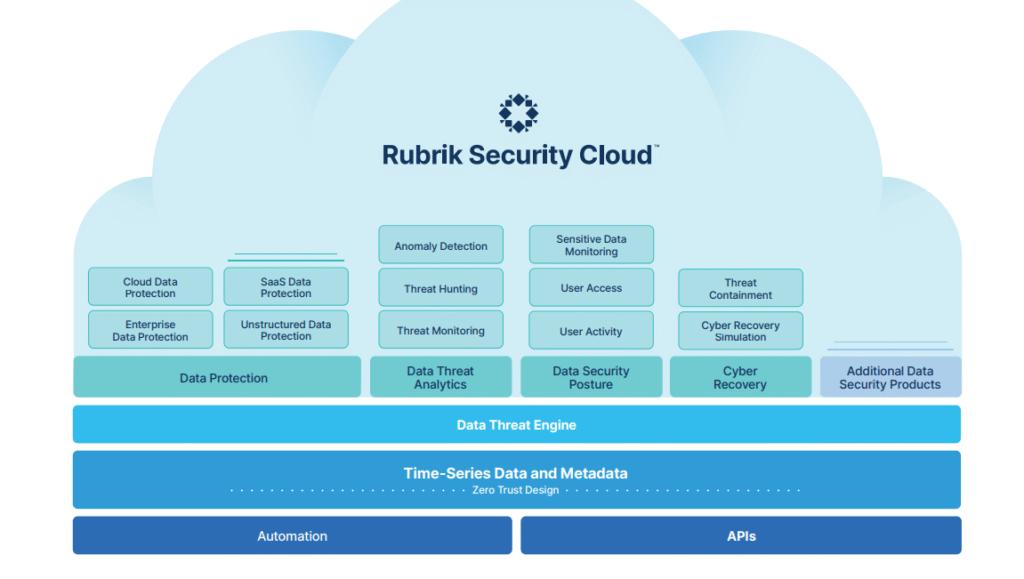
Standard Threat Hunting and ML-driven anomaly detection scan both on-prem and cloud backups for suspicious changes, while its data security posture management provides sensitive data discovery across the entire estate.
Worth noting: Rubrik catches threats by analyzing backup data after something has already happened.
It doesn’t monitor your live production environment for real-time reconnaissance or lateral movement.
SLA-Driven Automation and Live Mount Recovery
Where most backup platforms force you to configure individual jobs per workload, Rubrik inverts the model.
You assign workloads to SLA Domains (Gold, Silver, Bronze, or custom) and the platform handles everything else.
Backup scheduling, retention, replication, and archival.
The incremental-forever architecture performs one full backup, then only tracks changed blocks going forward, keeping backup windows short and storage consumption low.
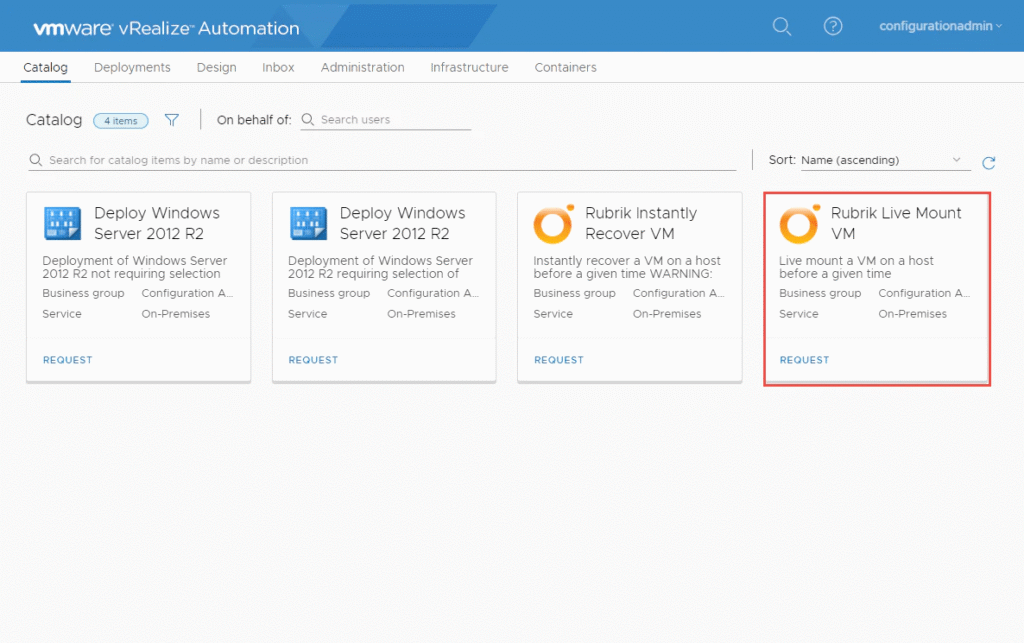
Live Mount is where this matters most for disaster recovery. Rather than waiting for a full restore to complete, Rubrik runs VMs and databases directly from backup storage.
A SQL Server, Oracle, or Epic Clarity database can be mounted and serving queries within minutes. You migrate to production storage afterwards, on your own timeline.
That said, SLA Domains cover data and application-level policies exclusively.
They don’t extend to infrastructure configurations like VPC settings, IAM roles, or DNS records.
Identity Recovery and Expanding SaaS Protection
Rubrik now offers full Identity Recovery for Active Directory forests and Microsoft Entra ID tenants, so that you can restore entire identity environments to a clean state (without reintroducing compromised objects).
Its 2025 roadmap added Okta Recovery with immutable backup support, plus DevOps Protection covering Azure DevOps and GitHub repositories.
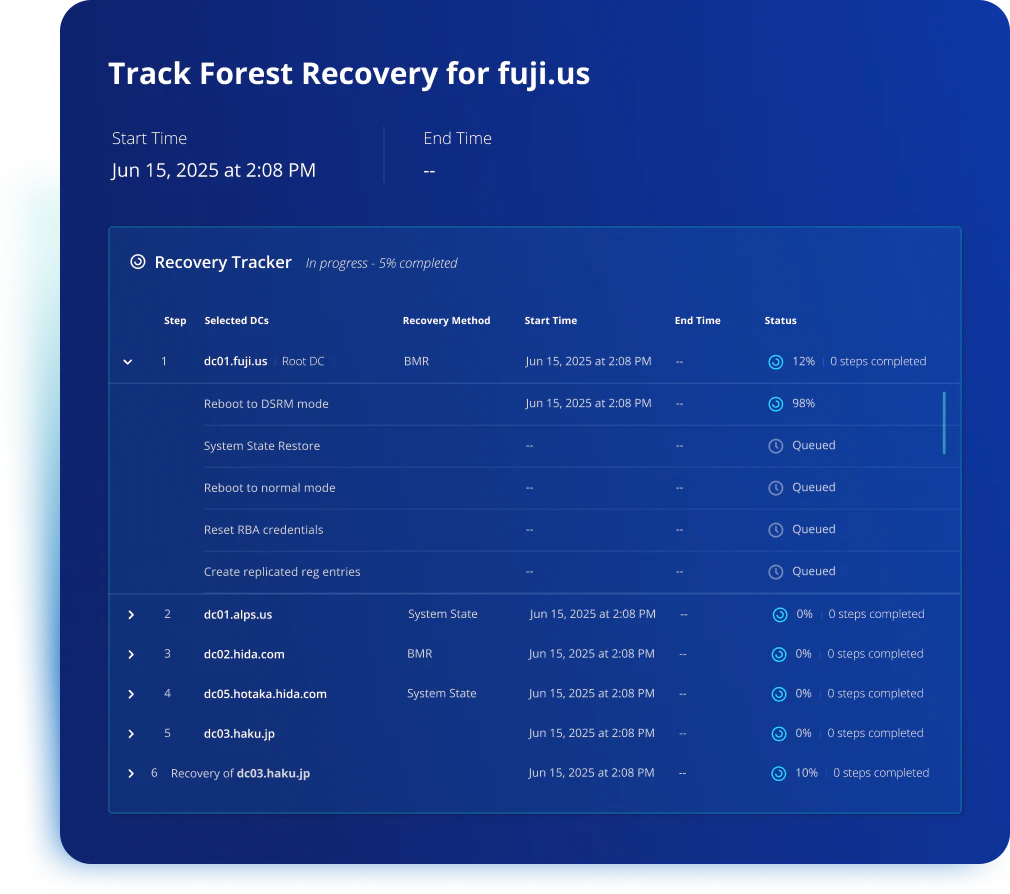
If an attacker compromises your identity infrastructure (an increasingly common step in ransomware playbooks), restoring AD forests and Entra ID tenants cleanly is a genuine differentiator that Veeam doesn’t match.
Rubrik also expanded coverage to Oracle Cloud Infrastructure, PostgreSQL, Red Hat OpenShift Virtualization, and Microsoft Dynamics 365 throughout 2025.
However, the pattern holds: Rubrik protects your data, your identities, and your SaaS application content.
Despite this, it doesn’t protect the cloud infrastructure configuration that all of those things depend on.
We knew we had to do something about this gap.
Data recovery is only half the equation: protect your cloud infrastructure with ControlMonkey
Your backup vendor will never tell you this, but recovering data is the easy part.
The hard part is everything that data needs to actually work.
Say your production AWS environment has 200 EC2 instances, 50 RDS databases, networking spread across 15 VPCs, 30 IAM roles with custom policies, Route 53 DNS records, Application Load Balancers, and EKS cluster settings.
Ransomware hits. Or a misconfiguration cascades. Or someone accidentally deletes a critical CloudFormation stack.
Rubrik restores your VM images and database snapshots.
Veeam recovers your files and application data.
The data-layer recovery works exactly as advertised. Then your team realizes that none of it is usable.
Every VPC, subnet, route table, security group, IAM role, DNS record, and load balancer configuration needs to be rebuilt: manually, under pressure, and with executives asking why production is still down and customers still locked out.
Gartner recognized this exact blind spot in 2025 by creating the CAIRS (Cloud Application Infrastructure Recovery Solutions) category, noting that traditional backup tools protect data but miss dependent cloud services and infrastructure configurations.
Only 64% of organizations actually meet their mission-critical RTOs today, and about 16% recover from ransomware within a single day.
Those aren’t data recovery failures. They’re infrastructure recovery failures.
This is exactly the gap that ControlMonkey’s infrastructure disaster recovery fills.
While Rubrik secures your data and workloads, ControlMonkey secures the cloud control plane: the networking, identity, DNS, CDN, security policies, and SaaS configurations that your data runs on.
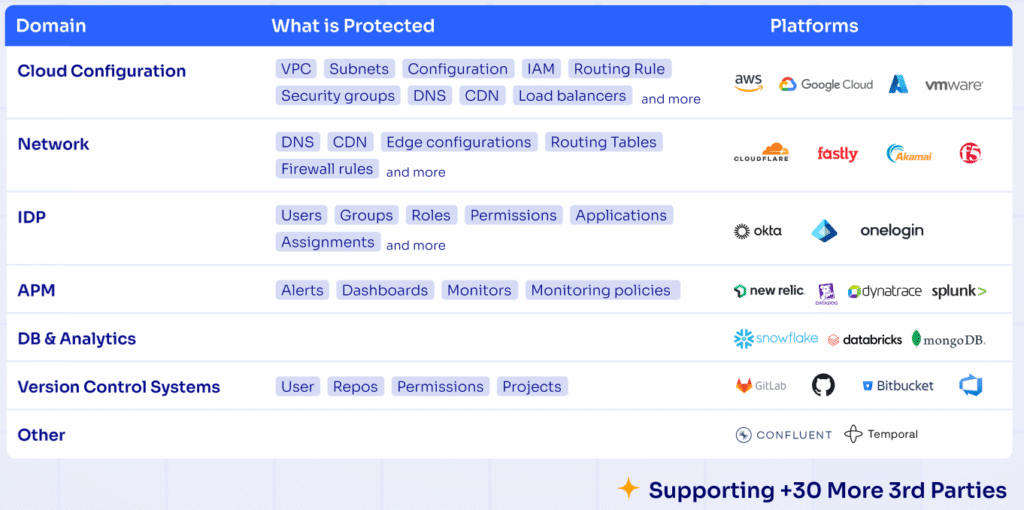
Here’s what ControlMonkey does that Rubrik and Veeam don’t:
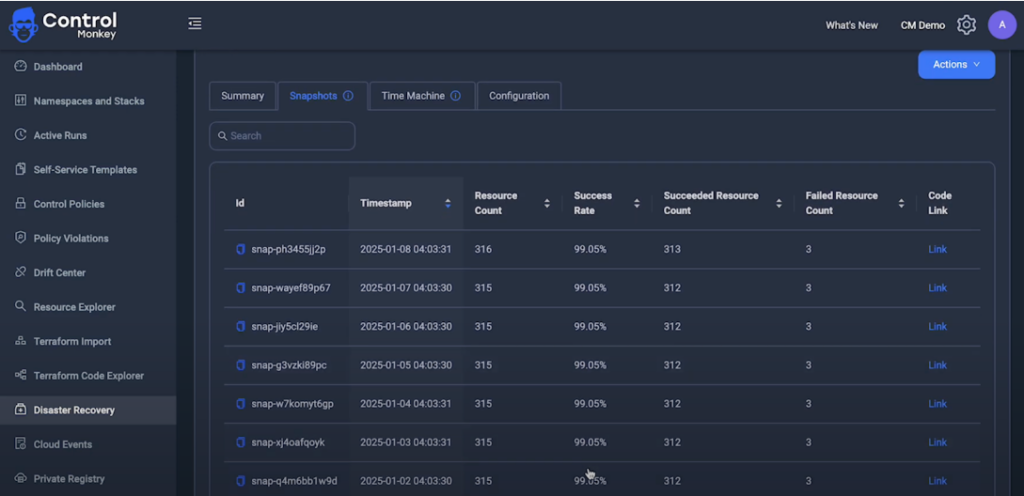
Daily Cloud Configuration and SaaS Vendors Snapshots
ControlMonkey automatically captures your entire cloud configuration across AWS, Azure, GCP, and third-party vendors like Datadog, Cloudflare, Okta, Confluent, and Temporal.
These aren’t just proprietary backup files, but are stored as Terraform code and state files in your own Git repository.
You own them, version them, and audit them like any other code.
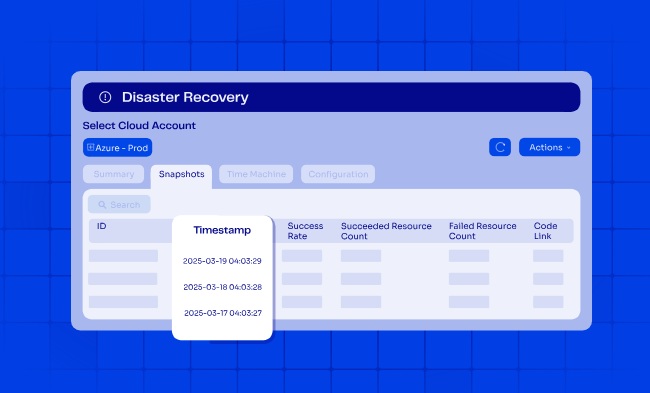
One-Click Recovery with Time Machine
When a misconfiguration, accidental deletion, ransomware or region-level failure happens, you open ControlMonkey’s Time Machine and browse to any previous known-good state.
A new threat vector we’re seeing lately is AI agents with overly permissive access making infrastructure changes or deletions they shouldn’t.
One click then restores the environment.
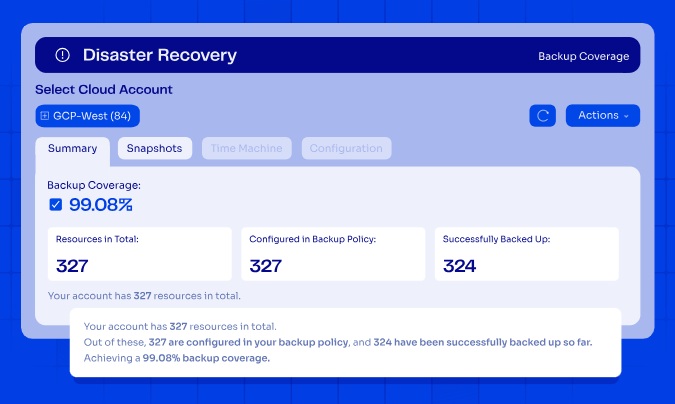
No more scrambling through runbooks and no more manual Terraform scripting late into the night.
This works whether you’re rolling back a single IAM policy change, deploying an application, or rebuilding an entire environment in a different region.
Cloud Resilience Dashboard
ControlMonkey also offers a real-time executive view of your organization’s infrastructure readiness across cloud accounts and third-party platforms.
You’ll be able to see what’s covered by IaC, what isn’t, and what’s ready for recovery.
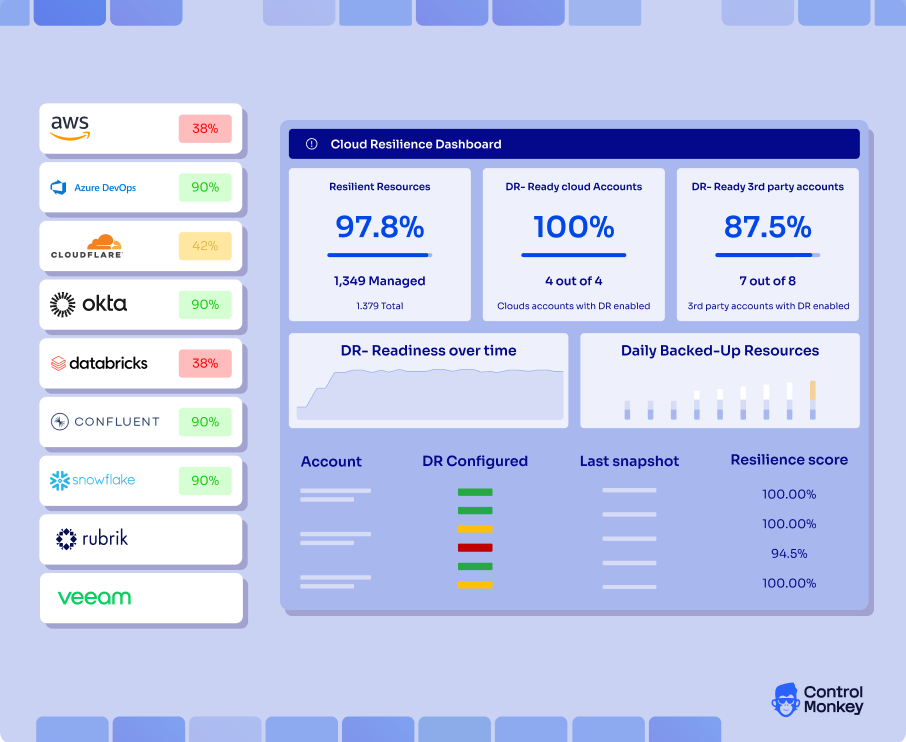
Our platform continuously validates DR readiness against SOC 2, ISO 27001, PCI DSS, and other compliance frameworks.
Drift Detection and Auto-Remediation
ControlMonkey continuously monitors cloud environments for configuration drift.
When someone changes a security group rule outside of Terraform, or an IAM policy gets modified manually, the platform detects it and auto-remediates through Git-based pull requests.
Misconfigurations get caught before they cascade into outages. Neither Rubrik nor Veeam tracks drift at the infrastructure layer.
Complete Cloud Inventory and Terraform Generation
The platform scans your cloud accounts and builds a full inventory of every resource.
It identifies what’s managed by IaC and what isn’t.
For unmanaged resources, it generates production-ready Terraform code so you can bring your entire environment under version control.
Companies like Block (the company behind Cash App and Square), Intel, and Comcast use ControlMonkey to protect their infrastructure configurations.
Block, processing over $240 billion annually for 55 million users, was able to achieve 100% DR-readiness and roughly 90% faster configuration recovery after deploying ControlMonkey across its multi-cloud setup.
How Would ControlMonkey Work with Rubrik in Reality?
Here’s the practical recovery sequence when both platforms are paired:
- Step 1: The incident. A ransomware attack encrypts your production AWS environment. VMs, databases, networking, IAM policies, DNS records, and security groups are all compromised.
Step 2: Infrastructure recovery with ControlMonkey. Your team opens the Time Machine and selects the last known-good infrastructure snapshot.
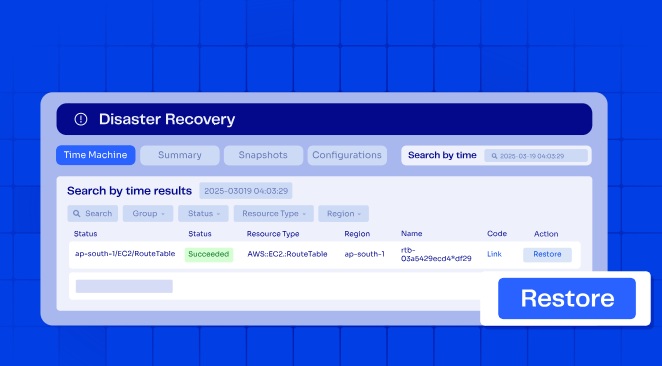
One click generates and applies the Terraform code to rebuild VPCs, subnets, security groups, IAM roles, Route 53 DNS, load balancers, CDN settings, and SaaS configurations.
Your full infrastructure skeleton is restored in minutes, instead of days.
If you need to failover to a different region or cloud provider, ControlMonkey’s multi-cloud support handles that with the same process.
- Step 3: Data recovery with Rubrik.
With infrastructure in place, your team uses Rubrik’s immutable backups to restore clean VM images, database snapshots, and application data onto the rebuilt environment.
Turbo Threat Hunting confirms the data is malware-free before going live.
Step 4: Identity and access restoration. Rubrik’s Identity Recovery restores your AD Forest and Entra ID tenants.
ControlMonkey restores your Okta configuration (groups, policies, assignments) from the Terraform backup in Git.
Step 5: Verification and go-live. ControlMonkey’s drift detection confirms the recovered environment matches the known-good state.
Rubrik confirms data integrity. Systems are live.
Without ControlMonkey, Step 2 becomes days or weeks of manual infrastructure rebuilding.
Together, the 2 platforms give you complete disaster recovery and an RTO measured in minutes instead of days.
Want to see what’s protected and what isn’t across your cloud and SaaS configurations?
Veeam’s Features
Linux-Native Architecture and Recon Scanner 3.0
Veeam Data Platform v13 is the biggest architectural shift in the product’s history.
For the first time, Veeam Backup & Replication runs natively on Linux as a pre-hardened appliance built on Rocky Linux.
This eliminates Windows Server licensing for the backup infrastructure and reduces the attack surface significantly.
The appliance ships with FIPS and DISA STIG compliance built in.
Recon Scanner 3.0, powered by Coveware’s threat intelligence, brings forensic analysis directly into the backup workflow.
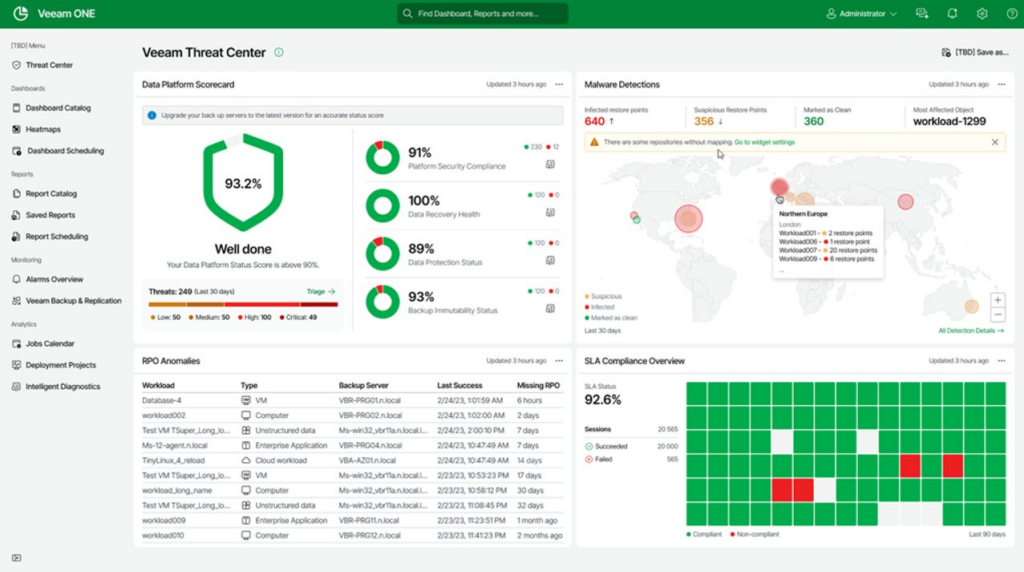
It flags brute-force attempts, suspicious file activity, and unexpected network connections, then maps findings to the MITRE ATT&CK framework.
Integration with Microsoft Sentinel means backup security alerts flow into existing SOC workflows without extra middleware.
Combined with inline entropy scanning and YARA rule support, Veeam sits at an unusual intersection of backup and cybersecurity.
Universal Hypervisor Integration API
Timing matters in enterprise software, and Veeam timed this well.
Since Broadcom’s VMware acquisition, organizations have been diversifying hypervisor strategies aggressively.
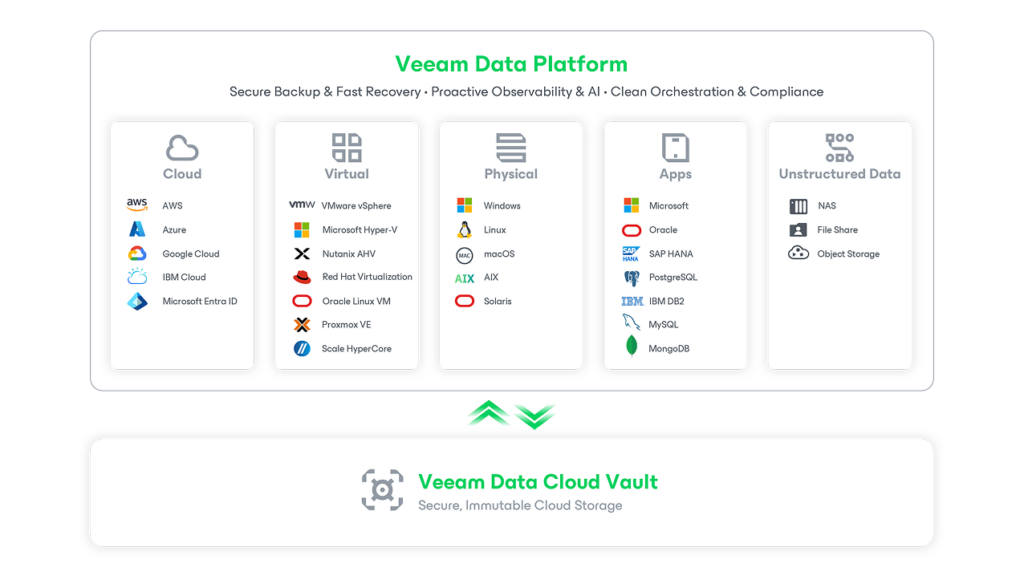
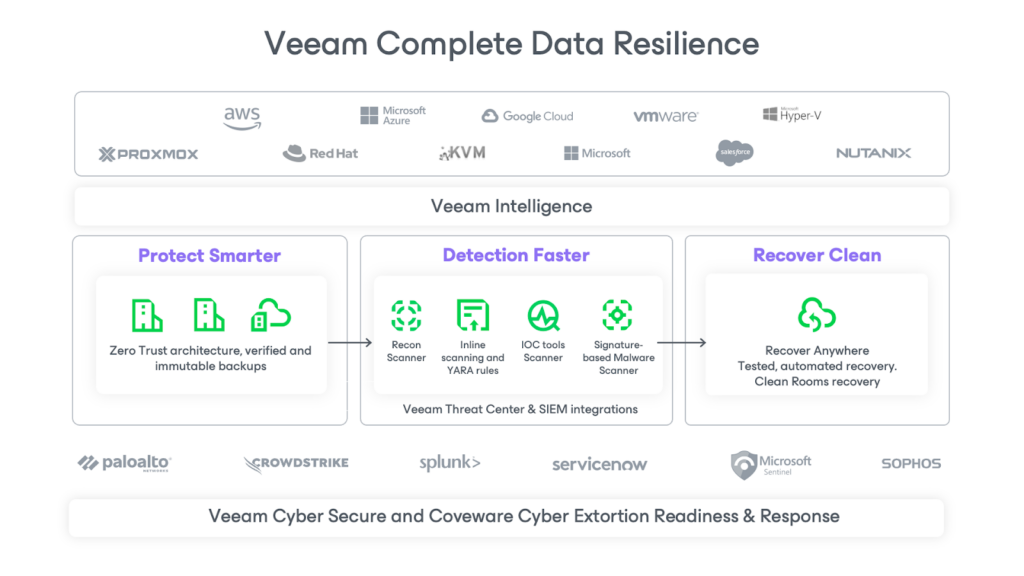
Veeam’s answer is the Universal Hypervisor Integration API, an open framework allowing any hypervisor vendor to build native integration with Veeam’s platform.
Today, Veeam supports seven hypervisors: VMware vSphere, Microsoft Hyper-V, Nutanix AHV, Proxmox VE, Scale Computing HyperCore, Oracle Linux Virtualization Manager, and Red Hat Virtualization.
Veeam Intelligence and AI-Powered Analysis
Veeam Intelligence, powered by Azure OpenAI, introduces natural-language AI into backup management with specialized agents:
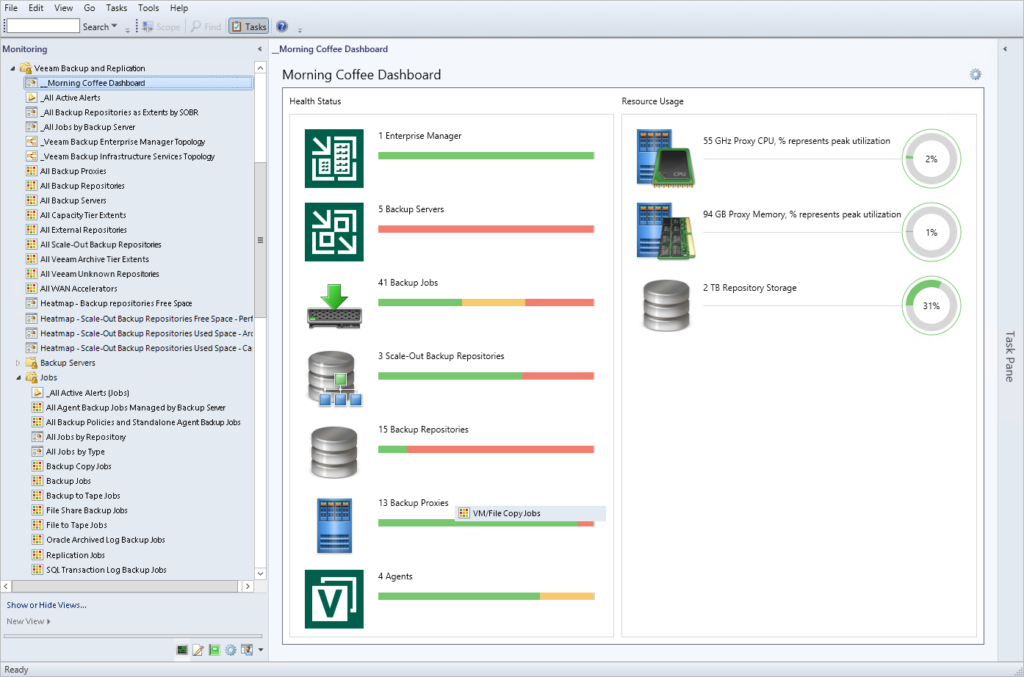
- The Morning Coffee Report delivers daily AI-generated briefings on backup job successes, failures, capacity trends, and anomalies.
- The Malware Threat Analysis Agent classifies detected threats and identifies the most recent clean restore point.
- The Deep Data Analysis Agent answers ad hoc questions about backup performance in conversational language.
This differs from Rubrik’s approach. Rubrik’s agentic Ruby AI can autonomously act on alerts and remediate issues.
Veeam Intelligence focuses on analysis and reporting and also keeping you in the loop for all decisions.
Integrations: Rubrik vs. Veeam
Rubrik’s Integrations
Rubrik integrates natively with AWS, Azure, GCP, and Oracle Cloud Infrastructure for cloud workloads.
- Hypervisor coverage includes VMware vSphere, Microsoft Hyper-V, Nutanix AHV, Red Hat OpenShift Virtualization, and VMware Cloud Director.
- Database support spans SQL Server, Oracle, SAP HANA, PostgreSQL, MongoDB, Cassandra, Db2, and DynamoDB.
- SaaS protection is where Rubrik has expanded most aggressively: Microsoft 365 (Exchange, OneDrive, SharePoint, Teams), Salesforce, Jira, Microsoft Dynamics 365, Azure DevOps, GitHub, and Okta.
- Security integrations include Microsoft Sentinel, Splunk, CrowdStrike, Palo Alto Networks, and Zscaler.
ServiceNow handles IT operations workflows and the Annapurna platform connects with Amazon Bedrock, Azure OpenAI, Google Agentspace, and Pinecone for GenAI use cases.

Rubrik’s ecosystem is narrower than Veeam’s in raw workload count but deeper in SaaS coverage and security integrations.
Veeam’s Integrations
Veeam’s integration story is built on breadth.
- Cloud coverage spans AWS, Azure, and GCP with dedicated backup products per provider.
- Hypervisor support is one of the broadest in the industry at seven platforms today, expanding through the Universal API.
- Database plugins cover Oracle, SAP HANA, SQL Server, PostgreSQL, MySQL, MongoDB, and IBM Db2.
- SaaS protection covers Microsoft 365, Microsoft Entra ID, and Salesforce. Narrower than Rubrik’s SaaS portfolio, but covering the highest-volume workloads.
- Kubernetes protection comes through Kasten K10, which is separately licensed.
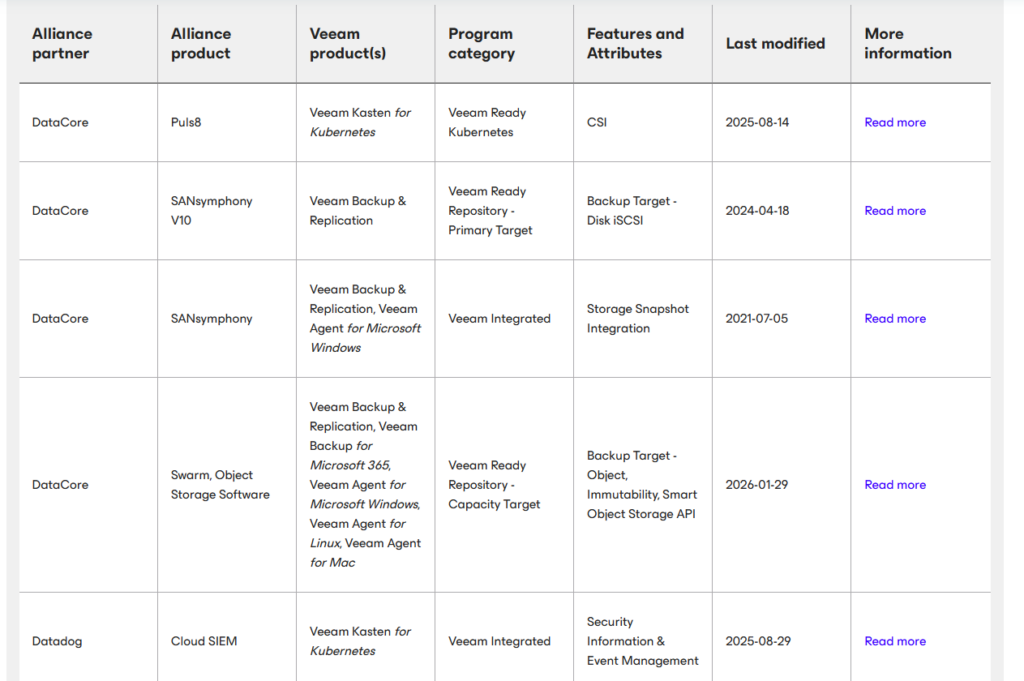
Where Rubrik goes deeper on security and AI, Veeam goes wider on infrastructure and platform coverage.
Pricing: Rubrik vs. Veeam
Rubrik’s Pricing
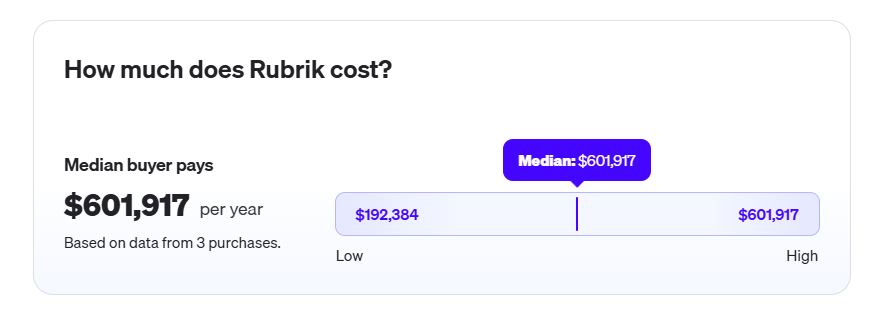
Rubrik’s pricing is not transparent, as the platform uses subscription-based licensing tied to data capacity and protected workloads. According to third-party data from Vendr, reported deals reach up to $601,917 per year, with $192,384/year on the low end: based on data from 3 purchases.
However, Rubrik’s appliance-based architecture means hardware costs stack on top.
The Rubrik R334 (3-node, 36TB) lists at approximately $100,000, while the R344 (4-node, 48TB) runs around $200,000.
The Cloud-Native Protection for AWS and Azure doesn’t require appliances but still carries subscription costs based on protected capacity.
Veeam’s Pricing
Veeam’s pricing is more transparent, though layered, and often requires contacting them to get a quote.
The Veeam Universal License (VUL) charges per workload on the front end.
One VUL covers one VM, physical server, cloud instance, or 500 GB of NAS capacity. Pricing breaks down across four editions:
- Foundation: Core backup and recovery. Minimum purchase is 10 VULs.
- Advanced: Adds Veeam ONE monitoring, YARA scanning, and advanced threat detection.
- Premium: Adds Recovery Orchestrator for DR automation and compliance documentation.
According to Stonefly, the Veeam data platform foundation costs $1,550 per 10-instance universal license for 1 year.
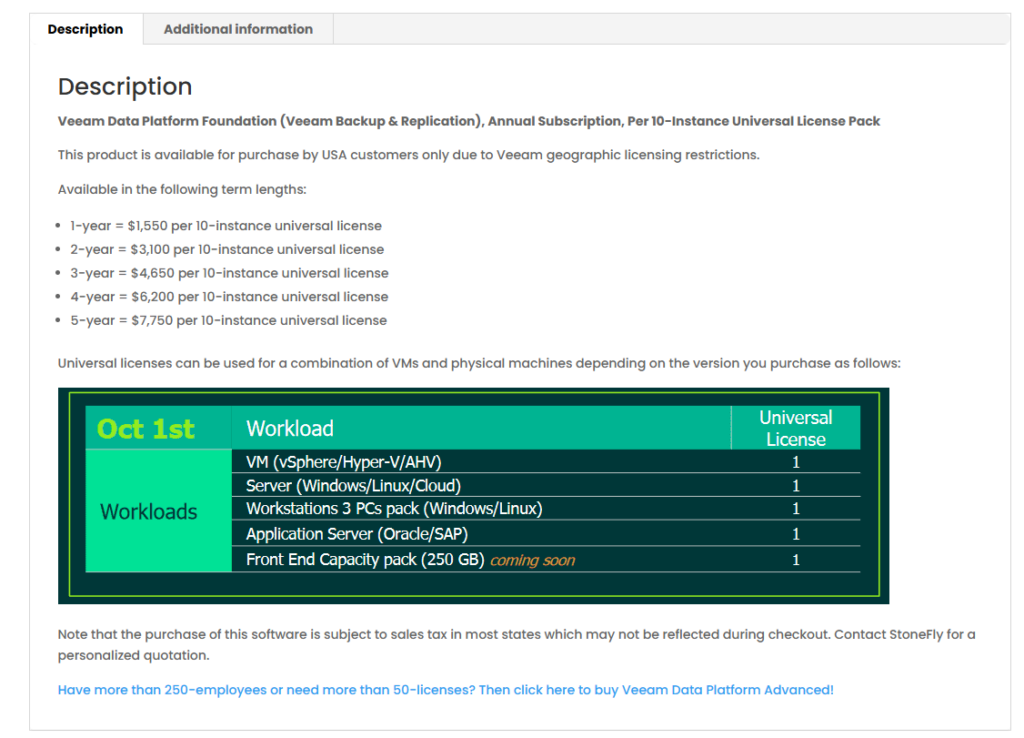
For Microsoft 365 backup, Veeam Data Cloud pricing ranges from $2.63/user/month (1-year prepaid) to $7.00/user/month (monthly billing).
Veeam’s software-only model means you provide your own hardware.
That’s a benefit if you have existing infrastructure and a cost factor if you’re starting from scratch.
What are customers saying about Rubrik and Veeam?
TL;DR:
- Rubrik’s reviews praise its simplicity and security defaults, but cost and limited reporting flexibility keep showing up as friction points.
- Veeam’s users highlight reliability and restore speed above everything else, but licensing complexity and multi-product management frustrate teams that expected a simpler experience.
Rubrik Reviews
- Rubrik’s reviews consistently praise its usability and security architecture, but some are not happy with its cost and under-documentation.
- Commvault’s users are satisfied with its coverage breadth and storage efficiency, but some users were not happy with its deployment complexity.
Rubrik Reviews
G2 Rating: 4.6 out of 5 (based on 106 reviews).
What users love:
- The intuitive UI and minimal management overhead.
- How the policies are flexible and can be tailored to fit different business requirements without complex configuration.
- Fast backup and recovery times without wrestling with overly complex setups.

‘’What I like the most is how simple it makes the whole backup and recovery process. The platform is very clear, tasks are set up quickly, and it allows you to see the status of all backups in a very transparent way.’’ – G2 Review
Common complaints:
- High cost and expensive renewals. This is the most frequent criticism across the platform’s reviews.
- Some of the advanced features, like analytics and threat hunting, can feel under-documented or require deeper product knowledge to use effectively.
- Limited reporting customization. Several reviewers want more configurable dashboards and outputs.

‘’Rubrik can be pricey compared to alternatives. Licensing and subscriptions for enterprise features sometimes feel steep, especially for smaller environments.’’ – G2 Review.
Veeam Reviews
G2 Rating: 4.6 out of 5 (based on 696 reviews).
What users love:
- Reliability and restore speed. Reviewers repeatedly cite fast, granular, and dependable recovery as the platform’s strongest point.
- How it allows for automatic backups without complications.
- The fact that it works on multiple devices and platforms without a problem.
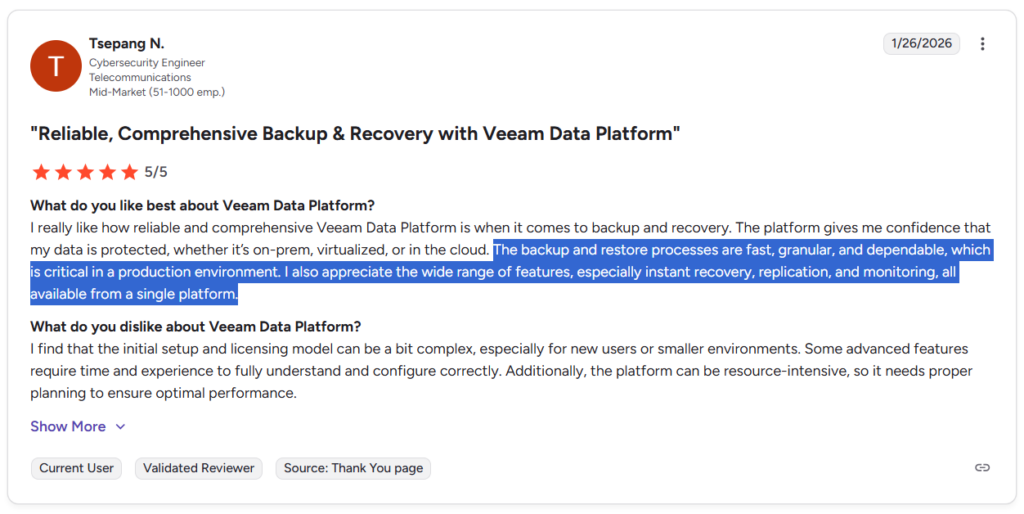
“The backup and restore processes are fast, granular, and dependable. I also appreciate the wide range of features, especially instant recovery, replication, and monitoring, all available from a single platform.” – G2 Review
Common complaints:
- Multi-product complexity. Veeam’s six-product portfolio (Backup & Replication, ONE, Recovery Orchestrator, Kasten, cloud products) overwhelms some teams, especially during upgrades.
- How the the initial setup and licensing model can be a bit complex.
- Reported problems with backing up Linux databases that have constant traffic.
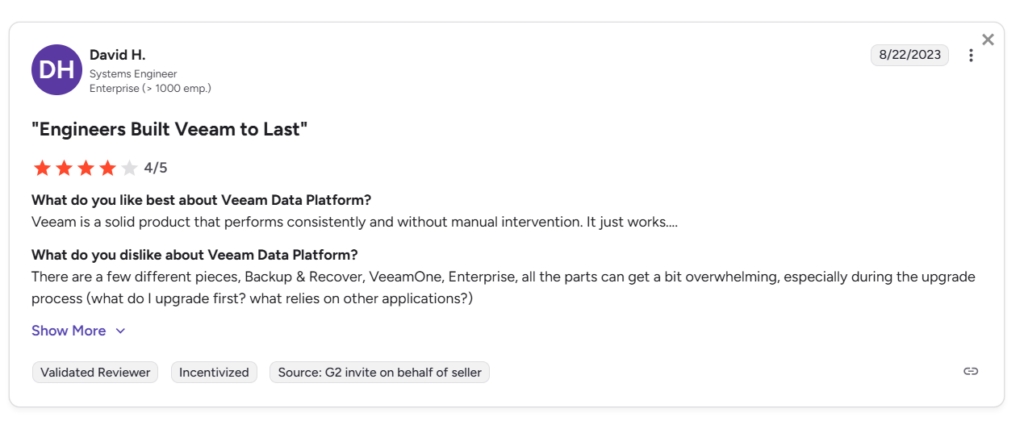
“There are a few different pieces: Backup & Recover, VeeamOne, Enterprise. All the parts can get a bit overwhelming, especially during the upgrade process.” – G2 Review
Veeam or Rubrik: Which platform should you choose for your data backup?
Rubrik is the right choice if you:
- Prioritize ransomware protection above everything else and want an immutable-by-design architecture backed by a $10M recovery warranty.
- Value the simplest management experience with SLA-driven automation that handles scheduling, retention, and replication without daily intervention.
- Need strong identity recovery for Active Directory, Entra ID, and Okta environments.
- Want broad SaaS protection covering M365, Salesforce, Jira, Azure DevOps, GitHub, Dynamics 365, and Okta from one platform.
- Want to explore GenAI applications against backup data through the Annapurna RAG platform.
Rubrik isn’t the best option if you:
- Have a tight budget.
- Run a multi-hypervisor environment. Rubrik supports five hypervisors, as Veeam supports seven and is heading toward thirteen.
- Need infrastructure configuration recovery after a cloud disaster. Rubrik doesn’t back up VPCs, IAM policies, DNS records, security groups, or networking configurations.
- Prefer hardware-agnostic, software-only deployment with flexibility to run on your own infrastructure.
Veeam is the right choice if you:
- Run a diverse, multi-hypervisor environment, especially if you’re moving away from VMware post-Broadcom and need Proxmox, Scale Computing, or Nutanix support.
- Want a lower entry cost.
- Need mature DR orchestration with automated compliance documentation.
- Prefer a Linux-native backup platform.
- Would value a large ecosystem of storage integrations, database plugins, and community resources.
Veeam isn’t the best option if you:
- Want zero-configuration immutability. Veeam requires you to set up hardened repositories, configure object lock, or use external immutable storage. It’s not structural by default.
- Need broad SaaS protection. Veeam covers M365, Entra ID, and Salesforce. Rubrik covers those plus Jira, Azure DevOps, GitHub, Dynamics 365, and Okta.
- Prefer a single-console experience. Veeam’s six separately deployable products and legacy console split frustrate teams seeking simplicity.
- Want AI that acts, not just reports. Rubrik’s Ruby AI can autonomously remediate issues, while Veeam Intelligence keeps humans in the loop for every action.
Your data is backed up. Your infrastructure probably isn’t
Veeam and Rubrik both do what they promise.
Your databases, VMs, SaaS data, and file systems will be recoverable. That’s settled.
What’s not settled is everything those workloads depend on to actually function.
When DNS records are wrong, security groups are missing, IAM roles don’t exist, and routing tables point to deleted subnets, your “recovered” data sits in a broken environment.
You have the files. You can’t serve a single request. That’s the position most organizations find themselves in during a major cloud incident, and it’s the reason only 64% of companies hit their mission-critical RTOs in practice.
ControlMonkey was built for this exact problem.
Our platform captures daily Terraform-based snapshots of your entire cloud configuration, stores them in your Git repository, and gives your team one-click recovery to any previous known-good state.
VPCs, IAM, DNS, security groups, load balancers, SaaS platform configs across Datadog, Cloudflare, Okta, and more.
All versions. All auditable. All recoverable in minutes instead of days.
Pair it with Veeam or Rubrik, and your DR strategy covers both halves of the equation: data and the infrastructure that makes data useful.
ControlMonkey is the right choice as a complement to your data backup platform if you:
Want predictable pricing with a fixed plan, as ControlMonkey starts at $800/month, with no consumption-based surprises.
Need to recover infrastructure configurations, not just data, after an outage or ransomware attack.
Want daily, automated backups of cloud and SaaS configurations stored as Terraform code in your own Git repository.
Care about drift remediation and want misconfigurations detected and fixed automatically before they become outages.
Need visibility into what’s actually running in your cloud, not just what’s in your backup vault.

A 30-min meeting will save your team 1000s of hours
A 30-min meeting will save your team 1000s of hours
Author