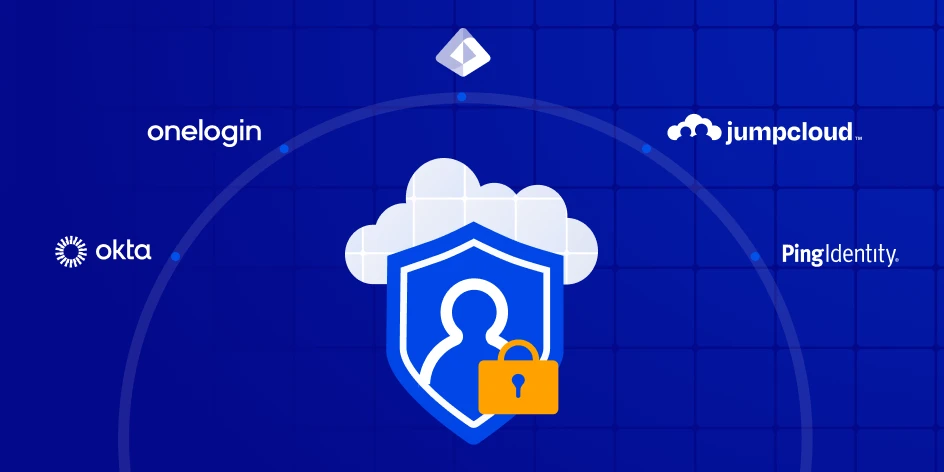
ControlMonkey now extends Cloud Configuration Disaster Recovery to identity providers, protecting identity environments across Okta, Microsoft Entra ID, OneLogin, Ping Identity, and JumpCloud.
Modern cloud operations rely heavily on identity providers. During daily operations and incidents, SSO, MFA policies, and access rules control how users interact with infrastructure, SaaS applications, and internal systems.
Yet the configurations behind these systems – authentication policies, app assignments, roles, and access controls – are rarely protected by a solution for disaster recovery.
Identity DR Key capabilities:
ControlMonkey automatically captures daily snapshots of identity configurations so teams can restore access environments and maintain operational continuity during incidents.
Protect access control configuration
Backup SSO settings, MFA policies, app assignments, roles, and identity rules created over time.
Restore identity environments quickly
Recover identity configurations from versioned snapshots instead of rebuilding access policies manually.
Detect configuration drift in identity systems
Track changes across IDP platforms and identify unexpected or unauthorized modifications.
Preserve identity-to-system relationships
Maintain consistency between identity policies, application access, and infrastructure during recovery.
Extend disaster recovery beyond infrastructure
Protect the broader cloud control plane including infrastructure, network, observability, and identity configuration.

Identity is not just another system – it’s the layer that connects users to everything else. Recovering identity in isolation doesn’t work. You need to restore it together with the infrastructure and applications it controls.

How does Identity Configuration Disaster Recovery work?
ControlMonkey Cloud DR solution continuously captures configuration snapshots from supported identity providers.
Each snapshot records the structure and settings of identity environments, including:
- SSO and federation configurations
- MFA and authentication policies
- Application assignments and integrations
- Roles, groups, and permissions
- Directory and access control structures
These configurations are versioned and stored securely, allowing teams to compare changes over time and restore previous configurations when needed.
If access policies are misconfigured, applications are disconnected, or identity rules break and and cause an incident – teams can restore identity configurations directly from a previous snapshot – without manually rebuilding/configuring access environments.
Why Disaster Recovery for the Identity Layer?
Traditional disaster recovery focuses on restoring data and storage.
But modern cloud environments depend on access.
The identity layer connects users to infrastructure, SaaS applications, and internal systems – making it a critical part of the cloud control plane.
With ControlMonkey, teams can:
- Maintain versioned backups of identity environments
- Detect configuration changes and drift
- Restore identity systems quickly during incidents
- Ensure DR visibility with a clear Resilience Score
At scale, restoring access quickly remains a challenge. Identity configurations are complex, frequently changing, and tightly connected to other systems.
By extending configuration disaster recovery to identity providers, ControlMonkey helps teams maintain operational continuity across both systems and access.
Cross-layer recovery: identity + infrastructure + SaaS
Identity does not operate in isolation.
ControlMonkey preserves and restores the relationships between identity, infrastructure, SaaS applications, and cloud resources — ensuring systems and access remain aligned after a recovery.
This prevents scenarios where identity is restored but underlying systems are not – or vice versa.
Ready to be Cyber Resilient?
Explore Cloud Configuration Disaster Recovery for Identity Providers or schedule a demo today.
Reference Table: Key Identity Provider Configurations Protected by ControlMonkeyenvironment.
Real-World Impact: Datadog dashboards, monitors, and alerting policies

Our Datadog dashboards, monitors, and alerting policies represent years of operational knowledge and tuning. Losing that configuration during an incident would significantly impact our ability to diagnose issues quickly. With ControlMonkey, we know our observability configurations are versioned and recoverable, ensuring we maintain visibility when it matters most

Ready to be Cyber Resilient?
Explore Cloud Configuration Disaster Recovery for Observability or schedule a demo today.
Reference Table: Key Identity Provider Configurations Protected by ControlMonkey
| Configuration | Description | Examples |
|---|---|---|
| SSO & Federation Settings | Configurations that define how users authenticate across systems and external identity providers. | SAML configurations OIDC settings Federation trust relationships Identity provider routing rules Domain verification |
| Authentication & MFA Policies | Rules that control how users authenticate and what security factors are required. | MFA policies Conditional access rules Password policies Adaptive authentication Device trust policies |
| Application Integrations & Assignments | Configurations that manage access between users and connected applications. | App integrations (SaaS, internal) User-to-app assignments Group-based access Provisioning settings (SCIM)SSO app mappings |
| Users, Groups & Directory Structure | Identity objects and their relationships within the organization. | User accounts Groups and roles Group memberships Directory attributes Organizational units |
| Roles & Access Control Policies | Definitions of permissions and administrative access across the environment. | Admin rolesRBAC policies Privilege assignments Access scopes Delegated admin controls |
| Identity Lifecycle & Provisioning | Rules governing user onboarding, updates, and deprovisioning. | User provisioning workflowsDeprovisioning rules SCIM sync settings Lifecycle policies Joiner/mover/leaver flows |
| API & Integration Configurations | Settings enabling integrations between identity providers and external systems. | API tokens Webhook configurationsIntegration endpoints Service accounts Automation connectors |
| Security & Risk Policies | Configurations that enforce identity security and detect anomalies. | Risk-based policiesLogin anomaly detection Geo/location restrictionsSession policies Threat protection rules |
| Audit & Logging Settings | Configurations defining how identity activity is tracked and monitored. | Audit logs configuration Event tracking settings Log retention policies SIEM integrations |
| Branding & User Experience Settings | Configurations that control the user-facing authentication experience. | Login pagesCustom domains Email templates User flows Self-service settings |